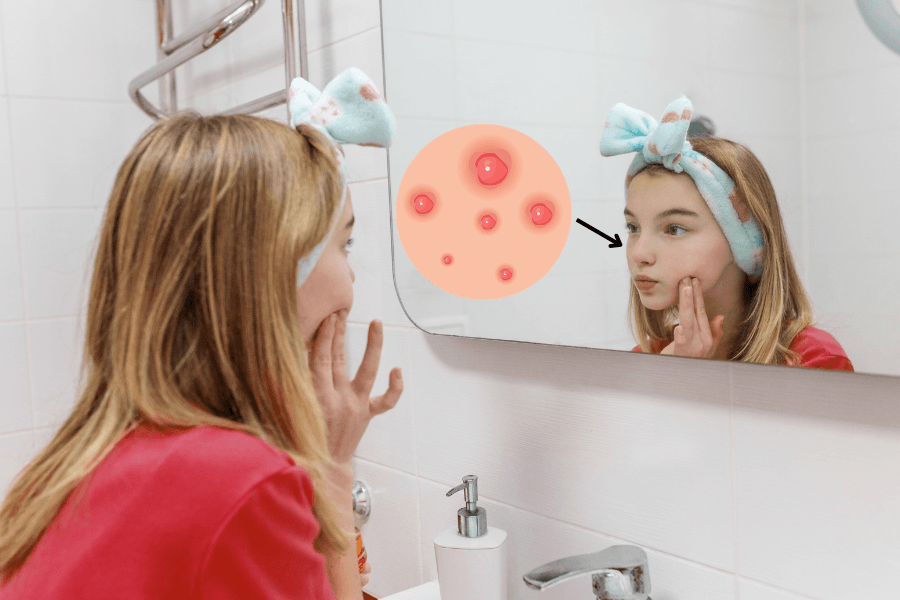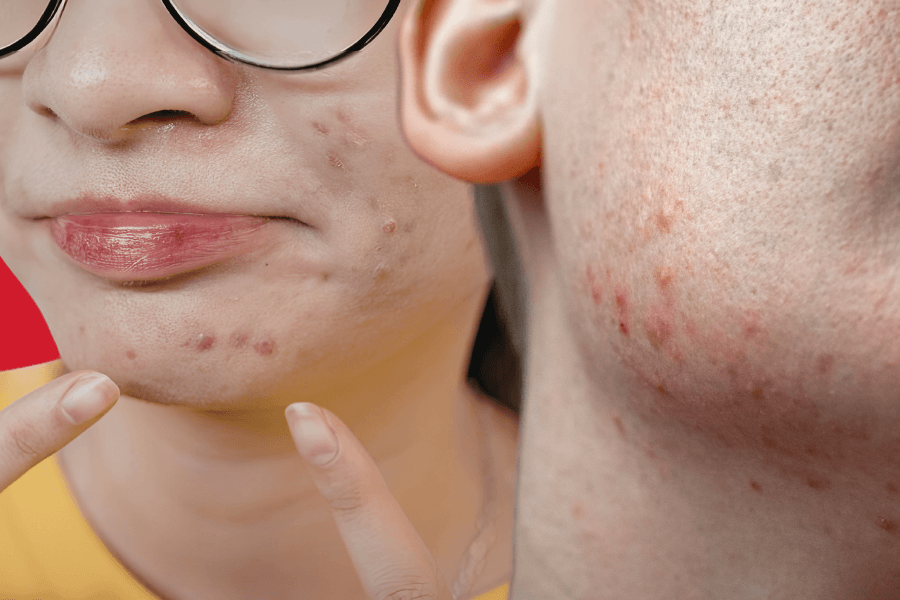
Tiny little acne bumps on forehead skin are one of the most searched skin concerns in Australia — and one that can be difficult to identify correctly. The bumps are there. They’re persistent. But they don’t behave like typical pimples, and which can make self-identification challenging.
Not all forehead bumps are the same
This distinction can influence treatment selection.
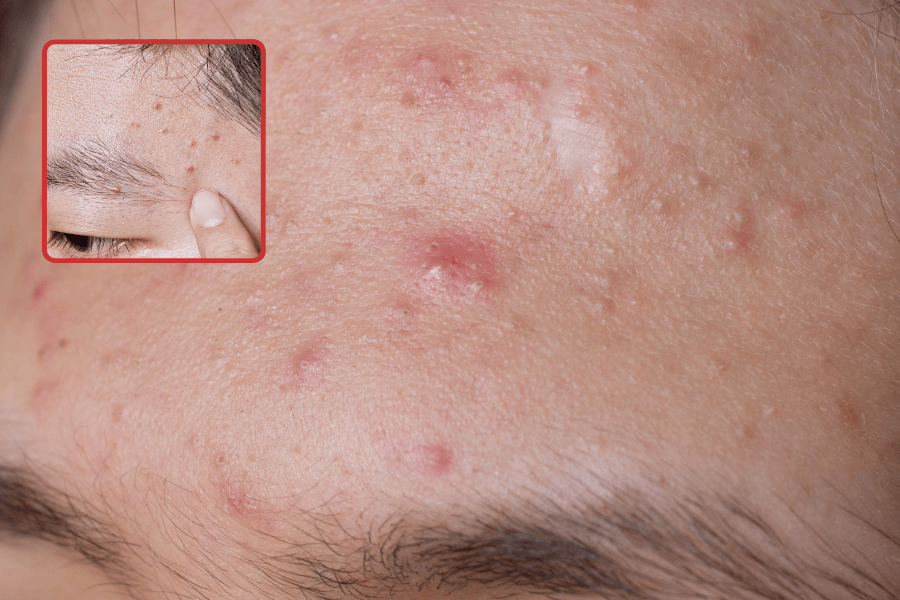
Small bumps on forehead acne can look almost identical across several different conditions — closed comedones, fungal acne, milia, comedonal acne, contact dermatitis. Flesh-coloured, clustered, sometimes rough to the touch. No obvious head. Won’t pop. Won’t budge with a standard acne cleanser. That last detail is the most telling one. That detail may provide a useful clue. When a product that works on typical breakouts does nothing for tiny bumps on forehead acne, one possibility is that the bumps may not be typical acne.
Getting the diagnosis right matters more here than with most skin concerns. Accurate identification of the condition is important. The treatment approach for fungal acne differs significantly. Using the wrong approach may not improve symptoms and, in some cases, may contribute to ongoing irritation.
What causes tiny little acne bumps on forehead
There’s rarely a single answer, and in most cases several factors are running at once. According to Healthdirect Australia, acne develops when hair follicles become blocked with oil and dead skin cells — a process that plays out differently depending on skin type, hormonal profile, and the products being used on the skin.
Closed comedones
Closed comedones form when a follicle becomes blocked with dead skin cells and sebum but the blockage sits beneath the surface rather than oxidising into a blackhead. The result is a small, skin-coloured bump with no visible opening. They cluster easily across the forehead — particularly in people with oily or combination skin — and they can persist for months without ever developing into an inflamed pimple.
Comedogenic skincare may contribute in some cases. Heavy moisturisers, pore-blocking sunscreens, and silicone-heavy primers are commonly reported contributors.. Hair products are another — conditioners, styling creams, and dry shampoos that make contact with the forehead regularly may contribute to comedonal acne along the hairline and across the upper forehead. This particular pattern — forehead bumps along the hairline — is common enough that it has an informal name in dermatology: pomade acne.
Fungal acne
Fungal acne isn’t acne in the traditional bacterial sense. It’s a yeast overgrowth — specifically Malassezia — that affects the hair follicles and produces clusters of small, uniform bumps that look almost identical to comedonal acne. Uniformity may be a useful distinguishing feature. Where bacterial acne tends to vary in size and stage, fungal acne presents as bumps of roughly the same size, often itchy, often worse after sweating or in humid conditions.
It may not respond to standard acne treatments. Benzoyl peroxide and topical antibiotics are generally not used to treat fungal acne — and in some cases, by disrupting the skin’s bacterial balance, they may worsen symptoms in some cases. Antifungal treatment may be considered where fungal acne is confirmed — topical or oral, depending on severity and a practitioner’s assessment — and that requires an accurate diagnosis first.
Comedonal acne
Comedonal acne covers both open and closed comedones — blackheads and whiteheads — but on the forehead it tends to present primarily as clusters of small closed bumps rather than the more visible blackhead type. Excess sebum production, sluggish skin cell turnover, and pore-blocking products are the usual contributors. Hormonal fluctuations can drive it too — particularly in adult women, where androgenic hormones stimulate sebum production and slow the rate at which the skin sheds dead cells.
Milia on forehead
Milia are small, white or flesh-coloured cysts that form when keratin becomes trapped beneath the skin surface. They look similar to whiteheads but are harder — almost pearl-like — and sit slightly deeper. Unlike comedones, they have no follicular opening, which means they can’t be extracted with typical pore-clearing methods.
They’re common around the eye area and on the cheeks but can develop anywhere on the face, including the forehead. Heavy creams and occlusive products are a frequent trigger. Unlike most acne types, milia are not caused by bacteria or yeast — highlighting the importance of identifying the underlying cause.
Why standard acne products often fail on forehead bumps
Most over-the-counter acne products are formulated to target inflammatory acne — the red, raised, bacteria-driven pimples that most people picture when they think about breakouts. Many forehead bumps are non-inflammatory in nature. They may respond differently to benzoyl peroxide depending on the underlying cause.
There’s also the product-trigger problem. Someone dealing with tiny little acne bumps on forehead caused by comedogenic skincare or hair products and then layering on more products — however well-intentioned — may contribute to ongoing symptoms rather than addressing it. Simplifying the routine may be considered as an initial step. This approach may be helpful in some cases where product ingredients are the primary driver.
Treatment options for tiny little acne bumps on forehead
The approach depends entirely on what’s causing them. That said, a few interventions apply broadly across most types of non-inflammatory forehead bumps.
Salicylic acid for forehead bumps
Salicylic acid is a beta hydroxy acid that works inside the pore — breaking down the sebum and dead skin cell buildup that causes comedonal acne and closed comedones. It’s oil-soluble, which means it penetrates the follicle rather than sitting on the skin surface. A salicylic acid cleanser or toner used consistently is one of the more reliable starting points for tiny little acne bumps on forehead driven by comedonal buildup.
Concentration matters. Most effective OTC options sit between 0.5% and 2%. Higher concentrations are available on prescription for cases that don’t respond to lower strengths.
Retinol for forehead bumps
Retinol — and prescription-strength tretinoin or adapalene — works by accelerating skin cell turnover and reducing the likelihood of follicular blockage. As the Australasian College of Dermatologists notes, acne is a medical condition that may improve with appropriate treatment — and for closed comedones and comedonal acne, retinoids are among the commonly recommended options in clinical guidelines. Results take time. Many people see meaningful improvement at the eight to twelve week mark, not before.
The early weeks can look worse before they look better — retinoids cause a purging phase as cell turnover speeds up and existing blockages are pushed to the surface. This may occur as part of treatment initiation for some people. Concerns should be discussed with the prescribing practitioner.
Prescription-strength retinoids are regulated by the Therapeutic Goods Administration and require a valid prescription from a registered Australian practitioner.
Niacinamide for forehead bumps
Niacinamide may assist with oil regulation and reduces the visible appearance of enlarged pores — both relevant for tiny little acne bumps on forehead driven by excess oil. It’s well-tolerated across most skin types and is often used alongside both salicylic acid and retinoids without the irritation risk of more aggressive actives.
Antifungal treatment
For confirmed fungal acne, antifungal treatment is the appropriate clinical approach. Topical antifungal agents — ketoconazole, clotrimazole — target the Malassezia yeast directly. In persistent or widespread cases, oral antifungal medication may be prescribed. This path requires a confirmed diagnosis, because antifungal treatment is not indicated for bacterial acne or closed comedones.
Skincare routine for forehead bumps acne
Regardless of cause, a few routine principles are commonly recommended. A gentle, non-comedogenic cleanser twice daily. A lightweight, oil-free moisturiser that doesn’t block pores. SPF every morning — preferably a mineral or hybrid formula that sits well under hair. Check every product in contact with the forehead — including shampoo, conditioner, and dry shampoo — for comedogenic ingredients. This may be helpful in some cases where product ingredients are the primary driver.
When to see a dermatologist for forehead bumps
If tiny little acne bumps on forehead have been present for more than eight to twelve weeks without responding to an adjusted skincare routine, clinical assessment may be appropriate. As the Therapeutic Goods Administration (TGA) recognises, therapeutic goods and regulated health services require appropriate clinical oversight — and lack of improvement may indicate that further assessment is warranted. If the bumps are itchy — particularly after sweating — fungal acne is worth investigating properly rather than guessing at. If there’s any uncertainty about what the bumps actually are, a dermatologist assessment may assist with diagnosis and management recommendations.
if self-directed treatment hasn’t moved things. Treating the wrong condition for months is a common reason people feel stuck — a clinical assessment may assist in identifying the underlying cause.
Telehealth acne consultation in Australia
Telehealth is one option for accessing professional skin assessment. Telehealth services allow patients to consult with AHPRA-registered practitioners online, receive clinical assessment and management recommendations, and where appropriate, have a prescription sent directly to a pharmacy. For tiny little acne bumps on forehead that haven’t responded to OTC treatment, this may be one option to consider to a clinical assessment. Acne Express is one such service available in Australia.
The bottom line
Tiny little acne bumps on forehead don’t always behave like typical acne — because in many cases they aren’t. Identifying the underlying cause can help guide treatment selection. Whether it’s closed comedones, fungal acne, or milia, management approaches may differ significantly. If self-directed treatment hasn’t produced results, professional assessment may be appropriate. Telehealth consultation with an AHPRA-registered practitioner is one option that may be considered where suitable.
FAQs
They can be — but not always. Closed comedones and comedonal acne are the most common cause. But fungal acne, milia, sebaceous filaments, and contact dermatitis can all produce a similar appearance. The distinction matters because the treatments are different — in some cases, incompatible. If bumps are uniform in size, itchy, and haven’t responded to standard acne treatment, fungal acne is worth investigating properly.
Yes . Conditioners, styling creams, and dry shampoos that make contact with the forehead regularly can introduce pore-blocking ingredients that trigger comedonal acne along the hairline. Checking product ingredient lists for known comedogenic compounds — isopropyl myristate, coconut oil, certain silicones — and switching to non-comedogenic alternatives may be helpful in some cases.
Occasionally — but not reliably. Closed comedones can sometimes clear as the skin naturally sheds dead cells, particularly if the triggering product has been removed from the routine. Fungal acne, which can mimic closed comedones, will not clear on its own and typically requires antifungal treatment. Milia rarely clear without some form of intervention. Waiting more than eight to twelve weeks without improvement is a reasonable signal to seek a clinical assessment rather than continuing to manage it independently.
It depends on the cause and what’s being done about it. Comedonal bumps triggered by a specific product may begin to improve once that product is removed from the routine, though the timeline varies by individual. With active treatment — salicylic acid, retinoids — many people see meaningful improvement at the eight to twelve week mark. Fungal acne often begins to respond to antifungal treatment within a few weeks, though individual response varies. Milia can take longer and may need professional extraction.
Generally, squeezing these bumps is not recommended. Most tiny little acne bumps on forehead are non-inflammatory, which means they have no accessible opening at the surface. Attempting to squeeze them may increase irritation and the risk of skin damage, increases inflammation, and significantly raises the risk of post-inflammatory hyperpigmentation and scarring. Extraction, where appropriate, is something a dermatologist or trained skin clinician does — not a DIY process.
The most reliable distinguishing factor is itch. Fungal acne tends to be itchy — sometimes noticeably so — particularly after sweating or in warm, humid conditions. Closed comedones are generally not itchy. Fungal acne also tends to present as clusters of bumps that are unusually uniform in size, whereas closed comedones vary more. If standard acne treatment — salicylic acid, benzoyl peroxide — has had no effect after several weeks, fungal acne is worth considering. A dermatologist can help determine the underlying cause through clinical assessment.
Yes — certain sunscreen formulas are comedogenic and a well-known trigger for forehead bumps, particularly chemical sunscreens containing octocrylene or heavy emollients. Mineral sunscreens — zinc oxide, titanium dioxide — are generally better tolerated for acne-prone skin. If forehead bumps developed or worsened after introducing a new sunscreen, switching formulas may be considered.
Stress doesn’t directly cause acne, but it does influence the hormonal environment that contributes to it. Elevated cortisol stimulates sebum production and can slow the skin’s natural cell turnover — both of which increase the likelihood of comedonal buildup. Stress-related acne tends to flare in patterns that correlate with sustained periods of pressure rather than appearing as isolated breakouts, which is a useful distinction when trying to identify what’s driving forehead bumps.
Disclaimer: This article is for general informational purposes only and does not constitute medical advice. Consult a registered healthcare professional before beginning any acne treatment. All treatments mentioned require appropriate clinical assessment by a qualified practitioner.