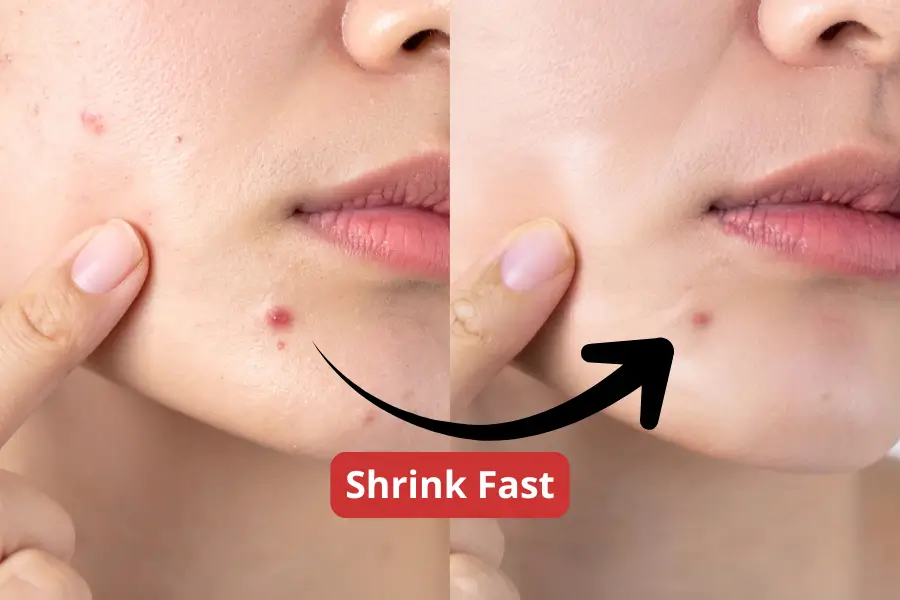
Treating a blind pimple inappropriately may prolong healing and increase irritation. No head. No way to pop it. Just a painful lump sitting deep under the skin, usually timed perfectly for something important. Here’s what may help—and what may increase irritation or delay healing.
First — what is actually happening under there
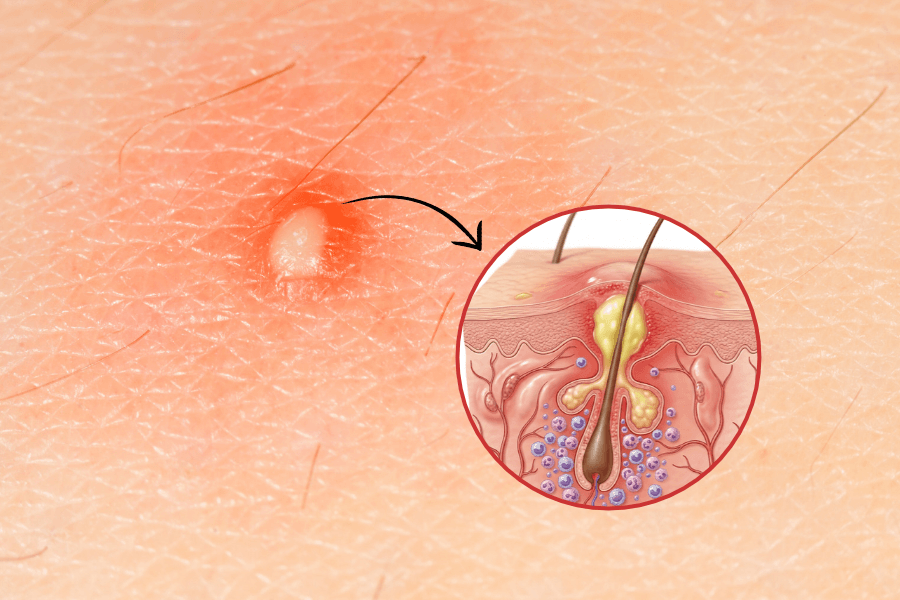
No opening. No exit point. A blind pimple is sebum, dead skin cells, and bacteria locked inside a blocked follicle with nowhere to go. The body treats it as a threat and sends an inflammatory response — which is what causes the swelling, heat, and tenderness you feel before you can even see anything.
That inflammatory response is also why squeezing it is pointless. Because there is often no surface opening, squeezing is unlikely to release the blockage. Squeezing may increase inflammation, damage surrounding tissue and raise the risk of scarring. What started as a contained lump may become more inflamed — and a much higher chance of a scar.
What works — in order of when to use it
Ice. Start here.
The moment you feel that deep, tender sensation forming under the skin — before it is even visible — get ice on it. Wrap a cube in a clean cloth. Hold it against the spot for two minutes. Do that three or four times through the day.
Ice may help reduce swelling and discomfort by temporarily constricting blood vessels. That controls how large the inflammation grows before it peaks. It will not kill the pimple. It may help limit swelling during the early stages.
Benzoyl peroxide — a commonly recommended treatment option
2.5% to 5% concentration. Anything stronger just irritates the skin around it without clearing the pimple faster. Apply a small amount directly on the spot once or twice daily. Leave it overnight when you can — adequate contact time helps maximise its effect.
Benzoyl peroxide helps reduce acne-causing bacteria and inflammation from inside the follicle. Consistent daily use from the early stage, some people may notice improvement over several days.
Salicylic acid — the alternative
Oil-soluble, so it is oil-soluble and may penetrate into pores. A 2% salicylic acid spot gel applied once daily loosens the blockage from the inside and may help reduce blockage within the pore.
One thing — do not use salicylic acid and benzoyl peroxide on the same spot at the same time. You get irritation, not faster results. Pick one or alternate them morning and night.
Warm compress — but not yet
For the first 48 hours, cold. After that, switch. A warm damp cloth held against the spot for five minutes, two or three times daily, increases circulation and encourages the pimple to come to a head naturally. This stage may help support the natural resolution of the lesion.
Do not rush it. Applying heat too early — before the initial inflammation has peaked — pushes more blood to an already inflamed area and may increase inflammation.
Pimple patches — useful, but only at the right moment
Hydrocolloid patches do very little while the pimple is still fully under the skin. Once a whitehead starts forming at the surface — that is when they earn their place. They may absorb wound fluid once the lesion has opened, protect the area from being touched or picked at, and may help protect the area and support healing. Keep them close. Use them at the right stage.
Niacinamide for the redness
Will not clear the pimple. May help reduce redness, angry appearance while it resolves. Apply a niacinamide serum morning and night under moisturiser.
Tea tree oil — diluted only
It has real antibacterial properties. One drop mixed into a small amount of moisturiser, applied directly to the spot. Undiluted tea tree oil on inflamed skin causes irritation that makes everything look worse. Diluted and consistent — some people may find it helps reduce inflammation.
Things that make it dramatically worse
Squeezing
Already covered — but worth repeating because most people still try it. There is often no surface opening. Attempting to squeeze it is unlikely to be effective. The pressure may increase irritation and damage surrounding skin, triggers a bigger inflammatory response, and may prolong healing and increase the risk of scarring.
Scrubbing over it
Physical exfoliants on active inflammation cause micro-tears in the skin. Those tears spread bacteria and increase irritation. Leave the scrub alone until the pimple has fully resolved.
Heavy foundation directly on top
Thick coverage blocks the follicle further. If you need to cover it — non-comedogenic concealer, light application, thorough removal at night. That is the limit of what you should be putting over an active blind pimple.
Trying to pop it before it is genuinely ready
Even once a whitehead forms, forcing it before the pimple is fully ready — when you need real pressure to get anything out — causes trauma to the surrounding skin. If it does not release with gentle pressure alone, leave it another day.
Realistic timeline
Healing time varies depending on the depth of the lesion, the individual’s skin and the treatment used. Smaller blind pimples may improve within several days, while deeper cystic lesions can persist for several weeks.
When over-the-counter treatment is not enough
One blind pimple that responds to spot treatment — that is normal skin behaviour.
The same spot breaking out repeatedly. Blind pimples that never come to a head. Cystic lumps that sit for weeks and leave marks. That is a different conversation.
Recurring blind pimples and cystic acne may be associated with hormonal or other underlying factors or may require prescription treatment. Acne Express offers online consultations with practitioners who specialise specifically in acne. A qualified practitioner can assess your presentation and discuss treatment options where clinically appropriate.
The Australasian College of Dermatologists is clear that treatment needs to match the individual and the type of acne — what works on surface breakouts rarely works on deep nodular acne. Early assessment and appropriate management may help reduce the risk of acne scarring.
Healthdirect Australia confirms that effective acne treatment is available — it just requires the right approach for the right type of breakout.
Frequently Asked Questions
In general, attempting to squeeze a blind pimple is not recommended. There is no surface opening — nothing to release. Squeezing drives the contents deeper, increases swelling, and makes scarring far more likely. Wait until a whitehead forms naturally, then use a hydrocolloid patch rather than your fingers.
Ice it for two minutes before bed. Apply benzoyl peroxide directly to the spot and cover with a pimple patch. It will not be gone by morning — Some people may notice reduced swelling by the following day. Consistent treatment over several days is what actually clears it.
That follicle is being repeatedly triggered — may be related to hormonal or other contributing factors. Blind pimples returning in the same location are a strong signal of hormonal acne. Over-the-counter products will not fix the root cause. Prescription treatment may be appropriate depending on the cause.
No. Toothpaste causes chemical irritation on facial skin, worsens redness, and damages the skin barrier. It contains no acne-fighting ingredients at useful concentrations. Products formulated for acne management are generally preferred — benzoyl peroxide or salicylic acid.
Ice in the first 24 hours. Benzoyl peroxide or salicylic acid spot treatment twice daily from day one. Warm compress after 48 hours. Hydrocolloid patch once a whitehead surfaces. Hands off the rest of the time. These measures are commonly recommended as initial self-care for blind pimples.
If the pimple has not improved after two weeks, is severely painful, or blind pimples are a recurring pattern — get a professional opinion. Professional assessment may be appropriate if symptoms persist or recur. Deep cystic acne that does not respond to OTC treatment may require prescription treatment, and early assessment may help reduce the risk of scarring.
Disclaimer: This article is for general informational purposes only and does not constitute medical advice. Individual results vary. Consult a registered healthcare professional before starting any acne treatment. All treatments mentioned require appropriate clinical assessment. Prescribing decisions are made by qualified practitioners based on individual patient history and clinical presentation.