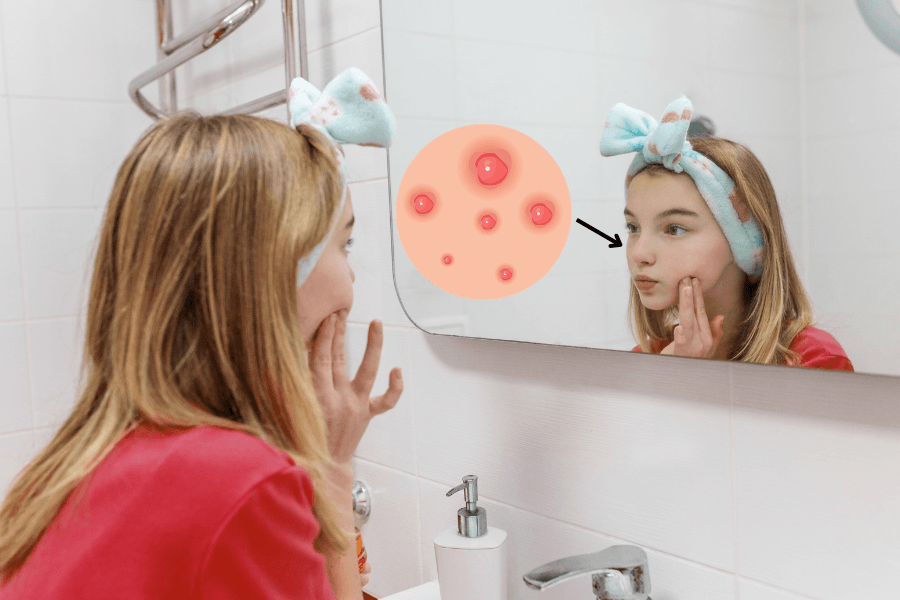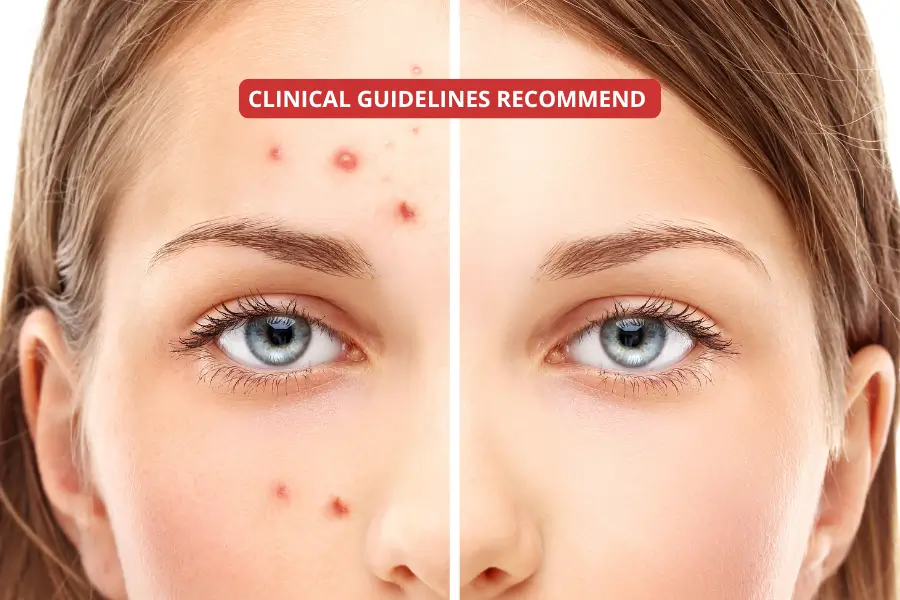
Evidence-based acne treatment plays an important role in the management of acne.
Not after the fourth cleanser. Not after six months of switching serums. Clinical assessment may help guide treatment decisions when acne persists despite self-management efforts. — one that accounts for their specific acne type, skin, and history. As the Australasian College of Dermatologists notes, acne is a medical condition that in severe cases can lead to scarring — and one that may improve with appropriate treatment. This article covers what that treatment looks like, which options clinicians actually prescribe, and how they may be accessed in Australia.
Why over-the-counter products fall short
The core issue isn’t ingredients. It’s concentration and context.
OTC acne products are built for the widest possible market — cautious actives, conservative strengths, generic usage instructions printed on a box. They can manage mild, intermittent breakouts for some people. That’s about where their utility ends. May be helpful for mild acne in some individuals, although more persistent acne may require clinical assessment.
Persistent acne has specific drivers: excess sebum production, bacterial overgrowth, follicular keratinisation, hormonal fluctuations. A clinician works from a diagnosis — not a skin type quiz, not a shelf category. What follows that assessment is different in kind, not just degree. Treatment recommendations are based on the individual’s clinical presentation. The prescription may offer options that are not available through over-the-counter products, because treatment selection is based on clinical assessment rather than general product guidance.
What clinicians commonly prescribe for acne
There’s no single answer here, and anyone who tells you otherwise is oversimplifying. What gets prescribed depends on acne type, severity, skin type, medical history, and in some cases, hormonal profile.
That said, the same treatments come up across clinical guidelines and real-world prescribing practice consistently enough to be worth covering in detail.
Topical retinoids
Tretinoin, adapalene, tazarotene. These are among the most commonly prescribed acne treatments — and the evidence base behind them goes back decades. They work by accelerating skin cell turnover and reducing comedone formation. With consistent use over months, they also improve the look of post-acne marks and skin texture, which matters as much to most patients as the breakouts themselves.
Tretinoin is prescription-only. It is commonly used in the management of moderate acne. Adapalene sits at lower concentrations OTC in some markets — but clinicians prescribe it at higher strengths. Both come with a slow introduction protocol, because the purging and irritation in the early weeks is real. Starting at low frequency and building up isn’t optional advice. Gradual introduction may help improve tolerability.
Benzoyl peroxide
Benzoyl peroxide targets Cutibacterium acnes — the bacterium behind inflammatory lesions. Available OTC at lower concentrations, prescribed at higher ones, and commonly used in combination formulas.
It is an established treatment for inflammatory acne. It also fails to deliver results when people apply too much, combine it with incompatible actives, or use it for non-inflammatory breakouts where it cannot help. A clinician specifies the right concentration and shows where it fits in a routine. Individualised treatment recommendations may improve treatment suitability.
Topical antibiotics
Clindamycin and erythromycin are prescribed most frequently for acne. Both reduce bacterial load and settle inflammation at the skin surface. The important clinical note: prescribing guidelines — consistent with AHPRA-aligned practice — pair topical antibiotics with benzoyl peroxide. Why? Antibiotic resistance. Using topical antibiotics alone, without that pairing, is actively discouraged. It’s worth knowing this if a prescriber recommends antibiotic treatment, so you understand what an appropriate plan looks like.
Azelaic acid
Azelaic acid is anti-inflammatory, weakly antibacterial, and effective at fading post-inflammatory hyperpigmentation. Sensitive or reactive skin types that can’t tolerate retinoids often manage azelaic acid well. It also has an established safety profile in pregnancy — which puts it in a short list of prescription acne treatments appropriate in that clinical context.
Prescribed at 15 to 20%, it’s typically prescribed at higher concentrations than those found in many cosmetic products..
Oral antibiotics
Moderate-to-severe inflammatory acne sometimes calls for systemic treatment. Doxycycline and minocycline are the most commonly prescribed oral antibiotics for acne — working across the skin broadly rather than at isolated sites, reducing both bacterial load and inflammation. According to Healthdirect Australia, many acne treatments need to be used for weeks or months before results become visible, and oral antibiotics are no exception.
Short-to-medium term only. Clinical guidelines are specific: pair with topical treatment, keep courses as brief as clinically appropriate. Extended antibiotic use carries documented risks — gut microbiome disruption, resistance development — and this shapes how cautious prescribers are now about duration.
Hormonal treatments
Some acne is hormonal at its core. Adult females presenting with cyclical breakouts concentrated along the jaw and chin, acne that worsens around menstruation, breakouts that don’t respond to standard topicals — these may indicate that further assessment is appropriate. Oral contraceptives or anti-androgens like spironolactone may be prescribed to target hormonal factors that may contribute to acne.
This path needs a thorough history and proper clinical assessment. A telehealth practitioner or GP can handle much of this process remotely for eligible patients.
Isotretinoin
For severe, treatment-resistant, or scarring acne, isotretinoin — Roaccutane — is among the most extensively studied and clinically supported options available. Clinical literature consistently identifies it as a high-efficacy choice for severe presentations, and some patients may experience prolonged improvement following treatment, although individual outcomes vary.
The side effect profile is significant. Monitoring throughout treatment is not optional. The Therapeutic Goods Administration (TGA) classifies isotretinoin as a Schedule 4 prescription medicine — tightly regulated, not suitable for everyone, requiring ongoing management by a qualified prescriber from start to finish.
Ingredients that support prescription treatment
Some evidence-based ingredients earn a place alongside prescription treatment rather than replacing it. Niacinamide helps regulate sebum and reduce visible redness. Low-concentration salicylic acid assists with exfoliation and pore clearance. Hyaluronic acid supports barrier function — which matters when stronger actives are running regularly.
These ingredients may be used alongside clinically guided treatment where appropriate. Used correctly, these ingredients make the treatment period more manageable and support skin health in the background.
Acne type and what it means for treatment
Acne subtypes can influence treatment selection — and getting it wrong is genuinely costly in terms of time.
Comedonal acne — whiteheads and blackheads, little inflammation — typically responds to topical retinoids and salicylic acid.
Inflammatory acne — papules and pustules — needs antibacterial treatment alongside a retinoid. Topical or oral, depending on how severe.
Cystic or nodular acne — deep, painful, higher scarring risk — usually requires systemic treatment. Isotretinoin may be on the table for resistant or severe presentations.
Hormonal acne — adult-onset, cyclical, lower face — may respond differently to standard topical treatments. Hormonal assessment may influence treatment selection.
Missing a hormonal pattern, treating comedonal acne with antibiotics, applying inflammatory acne protocols to cystic lesions — may delay appropriate treatment. Clinical assessment may assist with treatment planning. It can help guide appropriate treatment selection.
How to access clinically supported acne treatment in Australia
Access pathways to prescription acne treatment vary depending on location, practitioner availability, and clinical circumstances. Delays in assessment may be a consideration for some patients.
Telehealth is one option for accessing acne care. Services like Acne Express allow patients to consult with AHPRA-registered practitioners online, receive a clinical assessment, and where appropriate, treatment recommendations including prescriptions — in many cases within 24 to 48 hours. A referral may not be required in some cases.
Telehealth is appropriate for mild-to-moderate acne, adult acne, suspected hormonal presentations, and ongoing follow-up appointments. Complex or severe presentations may still require an in-person review. Many acne concerns may be suitable for telehealth assessment, although some presentations require in-person review.
The consultation process generally involves: complete a skin questionnaire, submit photos, attend a short consultation, receive management recommendations tailored to your presentation.
What to expect from treatment
Patience is part of this. Most prescription topicals show improvement at the 8 to 12 week mark — not two weeks in, despite what people want to believe. Oral antibiotics can move faster for inflammatory acne, but still need consistent use across weeks to months.
Retinoids often cause a purging phase early on. Breakouts temporarily increase as cell turnover ramps up. Some people experience an initial increase in breakouts during retinoid treatment. If concerns arise, follow-up with the prescribing practitioner is recommended. This phase usually resolves within four to six weeks of continued use.
Stopping treatment early may affect treatment outcomes. A clinician will advise on when to adjust, taper, or hold a treatment based on how the skin is actually responding — not just how long the prescription has been running.
The bottom line
Clinically guided acne treatment is based on individual assessment and treatment selection. Treatment selection depends on acne type, severity, and individual circumstances. That takes clinical assessment. Individual response to treatment varies, and a qualified practitioner will tailor the plan accordingly.
If acne has not improved with self-management, professional assessment may be appropriate. Acne Express offers online acne consultations with AHPRA-registered practitioners — referrals may not be required in some circumstances, with a clinical assessment and management recommendations based on your clinical presentation.
Disclaimer: This article is for general informational purposes only and does not constitute medical advice. Individual results vary. Consult a registered healthcare professional before starting any acne treatment. All treatments mentioned require appropriate clinical assessment. Prescribing decisions are made by qualified practitioners based on individual patient history and clinical presentation.