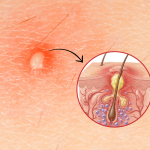
Nobody thinks twice about a regular pimple. A bump inside the nose can have several possible causes. The area contains hair follicles and can be affected by irritation or infection. So while most of the time it’s nothing, the location changes the calculus a bit.
Here’s what’s usually behind it, what’s normal, and at what point you stop waiting and book a consult.
What’s Actually Causing It
A handful of things tend to be responsible.
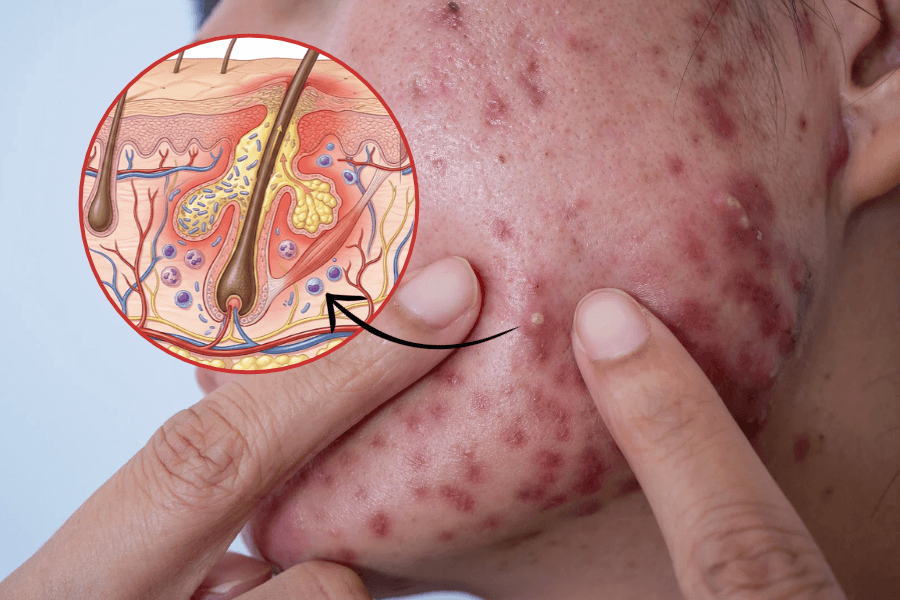
Folliculitis is one possible cause of a bump inside the nose. Your nostrils are lined with hair follicles just like the rest of your body, and those follicles can become inflamed or infected, as can hair follicles elsewhere on the body. Picking or repeated irritation can contribute to follicle inflammation. So is plucking nasal hairs, or just blowing your nose constantly during a cold — enough friction and irritation, and a follicle flares up.
An ingrown nose hair does something similar. The hair curls back into the follicle instead of growing straight out, the skin reacts, and you end up with a red, tender bump that feels a lot like a pimple.
Nasal vestibulitis is one worth actually knowing the name of. It’s a bacterial infection — usually staph — that gets into a small break in the skin just inside the nostril, often from picking or a rough tissue. Early on it can be hard to tell apart from a normal pimple. Symptoms can include redness, tenderness, crusting or swelling around the affected area.
A nose boil, or furuncle if you want the clinical term, is what happens when that infection sits deeper. Firmer, more painful, slower to resolve.
And then there’s plain staph. Most of us carry staphylococcus on our skin without any trouble from it — the problem starts once it finds its way into a cut, a scratch, or a follicle that’s already irritated. A bacterial infection in this area can occasionally become more extensive, which is why worsening symptoms should be assessed promptly.
So, Is It Actually Dangerous?
Most minor bumps inside the nose are not serious and may resolve without complications.
But there’s a reason dermatologists sometimes call the area around the nose and upper lip the "danger triangle." The area around the nose and upper lip has venous connections with deeper structures of the head, which is one reason significant infections in this region can occasionally lead to serious complications. This complication is rare and does not mean that most minor bumps inside the nose are dangerous.
It is a reason to pay attention if you notice redness or swelling spreading beyond the nostril, a fever showing up alongside it, worsening or severe pain, or swelling around the eyes.
The specific complication doctors are watching for here is cavernous sinus thrombosis — a rare but serious condition where infection spreads to a group of veins behind the eyes and involves a blood clot in the cavernous sinus, a group of veins located behind the eyes. It’s the reason the "danger triangle" gets talked about at all. Warning signs include swelling around one or both eyes, vision changes, a severe headache, and a high fever. It is rare, but symptoms suggesting a serious spreading infection require urgent medical assessment — but it’s serious enough that it’s worth knowing the name and the red flags. These symptoms should not be ignored.
How Is a Pimple Inside the Nose Diagnosed?
Diagnosis usually starts with a description of the symptoms — how long it’s been there, what it looks and feels like, and whether it’s improving or getting worse — along with a visual assessment. This information, together with visual examination, can help distinguish between possible causes.
If it’s not responding to initial care, or it keeps coming back, further assessment may be recommended to identify the underlying cause and guide next steps.
How Is a Pimple Inside the Nose Treated?
Treatment depends on what’s causing it and how far along it is. Some mild cases may improve with conservative care, such as avoiding irritation and maintaining gentle hygiene. Treatment depends on the underlying cause and severity. A more established infection, like nasal vestibulitis or a boil, may need further clinical assessment to determine the appropriate acne treatment approach. Self-treating with leftover medication or something meant for a different condition isn’t recommended — it may not be appropriate for the underlying condition and can complicate assessment.
At-Home Care While You Wait It Out
For a mild case, there’s a fair bit you can do yourself:
- A warm compress against the outside of the nose may help relieve discomfort
- Keep the area clean, but don’t over-wash or scrub it
- Avoid picking, plucking, or touching it more than necessary
- Skip makeup or products near the area until it’s settled
- Blow your nose gently, and use a soft tissue rather than a rough one
These measures are not a substitute for professional assessment if symptoms are persistent or worsening — it’s what to do in the meantime, not a substitute for getting it looked at.
Please Don’t Pop It
Yeah, we know — it’s tempting. But squeezing or picking a bump inside the nose may damage the surrounding tissue and increase irritation or the risk of infection, which is precisely what you don’t want in an area this close to your sinuses. It may worsen inflammation or contribute to infection.
If it’s uncomfortable, a warm compress against the outside of your nose does the job better. It may help relieve discomfort without the tissue trauma associated with squeezing or picking.
How Long Should This Take to Heal?
If it’s a straightforward case — simple folliculitis, an ingrown hair, nothing fancier — Minor bumps may resolve over several days, although healing time varies depending on the cause. Keep the area clean, resist the urge to touch it every hour, and let it do its thing.
If symptoms are not improving, are worsening, or persist beyond several days, consider seeking professional assessment.
When It’s Time to See a Skin Specialist
A few situations are worth an actual consultation rather than more waiting around:
- It hasn’t improved after 7-10 days
- The pain is severe, or it’s getting worse rather than better
- Swelling has spread past the nostril itself
- There’s a fever with it
- It keeps showing up in the same spot, over and over
- You are unsure whether the lesion is a pimple, boil, infection or another condition
Trying to diagnose anything inside your own nostril is harder than it sounds — you can barely see it, for one — and conditions like nasal vestibulitis, folliculitis, and boils can look almost identical in the first day or two despite needing different care.
Bottom Line
Many minor bumps inside the nose resolve without complications, but the cause and severity can vary. Given where it is, though, it’s worth keeping an eye on rather than ignoring outright. Spreading redness, fever, or pain that won’t quit are the signals to act on — and avoid squeezing or picking the area.
Past a week, or if something about it just doesn’t sit right, get it looked at. Professional assessment may be appropriate when symptoms are persistent, worsening or difficult to identify.
This article is for general informational purposes only and isn’t a substitute for professional medical advice, diagnosis, or treatment. Always seek the guidance of a qualified health professional regarding any medical condition.
Frequently Asked Questions
Rarely. Many minor bumps resolve without complications, although the timeframe varies depending on the cause. Spreading redness, fever, or worsening pain are the exceptions worth acting on — the nose’s location just means worsening symptoms warrant medical assessment because infections in this area can occasionally become more serious.
Best not to. Doing so risks driving bacteria deeper into the tissue, and squeezing may increase tissue irritation and the risk of infection.
Possible causes include folliculitis, ingrown nasal hairs, nasal vestibulitis and, less commonly, deeper infections such as boils. Nasal vestibulitis, a bacterial infection, is also common. Staph infections and deeper boils happen too, just less often.
Minor cases may improve over several days, but healing time varies depending on the cause. If a week’s gone by with no improvement, that’s worth a proper look.
These features may indicate infection and warrant medical assessment, particularly if symptoms are worsening. These symptoms are a reason to seek medical assessment rather than continuing to monitor the lesion at home.
Assessment generally involves a clinical history and examination of the affected area — timeline, appearance, and whether it’s improving or not. Further assessment may follow if it isn’t responding to initial care.
It depends on the cause. Some mild cases may resolve without specific treatment, depending on the underlying cause. More established infections, like vestibulitis or a boil, need proper clinical assessment to determine next steps.
A warm compress, gentle cleaning, avoiding picking or touching it, and using a soft tissue when blowing your nose. These measures may help relieve discomfort in mild cases but aren’t a substitute for professional care if it’s not improving.
A rare complication in which an infection spreads to the cavernous sinus, a group of veins behind the eyes, and a blood clot develops. Signs include eye swelling, vision changes, severe headache, and high fever — it’s uncommon, but worth knowing given its link to the “danger triangle” around the nose.
Disclaimer: This article is general information only and isn’t a substitute for personalised medical advice. If you’re concerned about your teenager’s skin, speak with a registered health professional.