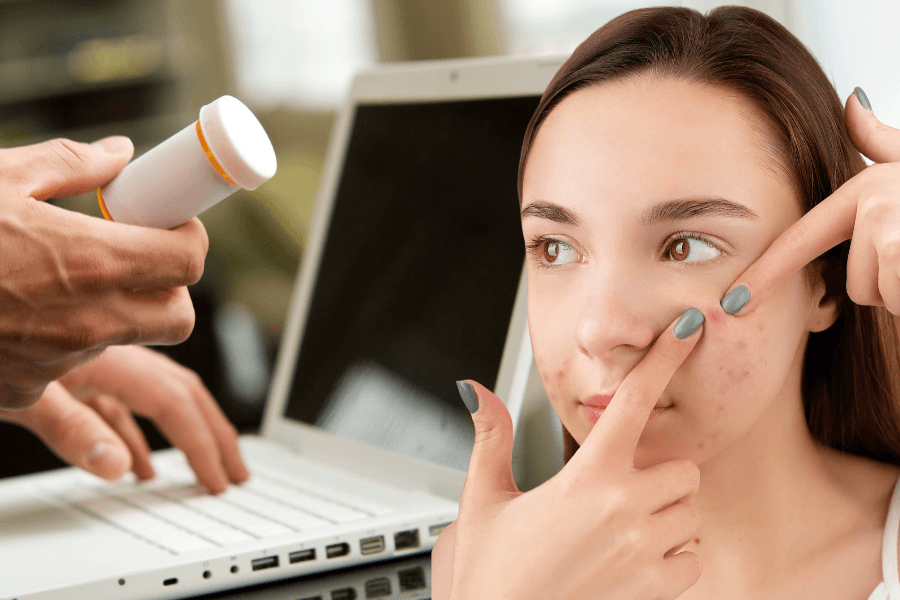
You’ve changed your cleanser three times this year. You cut back on chocolate. You bought the serum everyone online raves about. And still, the breakouts keep coming back.
When that happens, it may be worth looking beyond the individual spots to the factors that could be contributing to your breakouts. Acne root cause identification means working backwards from your breakouts to what might be driving them. That could be hormones, habits, products, medicines, or a mix. Understanding the factors that may be contributing to your acne can help you and your doctor discuss suitable management options.
Below, we look at how acne forms, the usual triggers, the clues your skin may give you, and when to get a doctor’s view.
Why acne root cause identification matters
Acne isn’t one condition with one cause. Two people can have breakouts that look much the same and still need quite different care.
Take a teenager with oily skin and blackheads on the nose. Now picture a 32-year-old with sore lumps along the jaw that flare before each period. Same word, “acne”. Very different picture.
When contributing factors aren’t recognised, it can be harder to work out which management options may be appropriate. People switch products before they’ve had a fair go. They use something meant for one type of acne on another. Some just decide their skin is “bad”, when the right approach hasn’t been tried yet.
Identifying possible contributing factors won’t guarantee a particular result or an immediate improvement. However, it may help inform discussions about suitable management options.
What causes acne in the first place
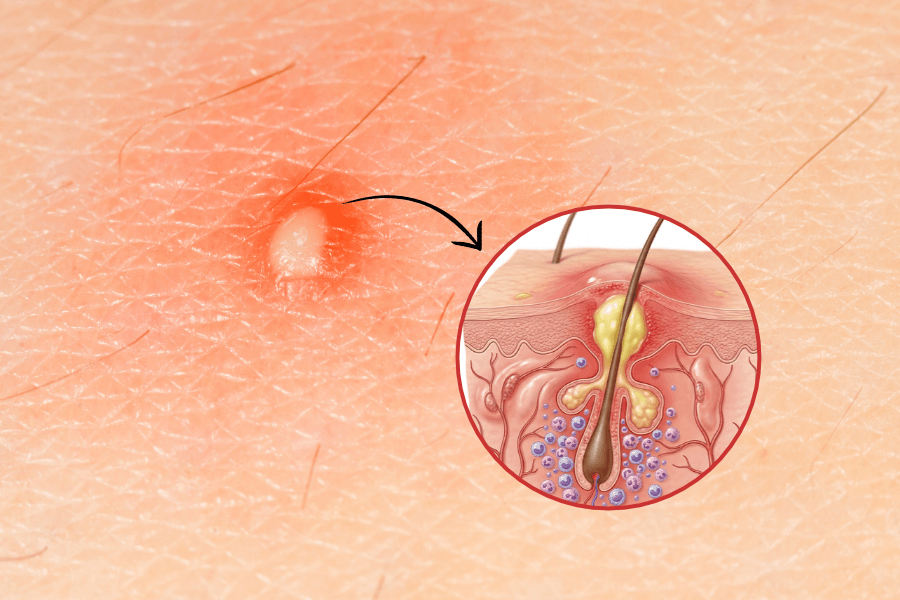
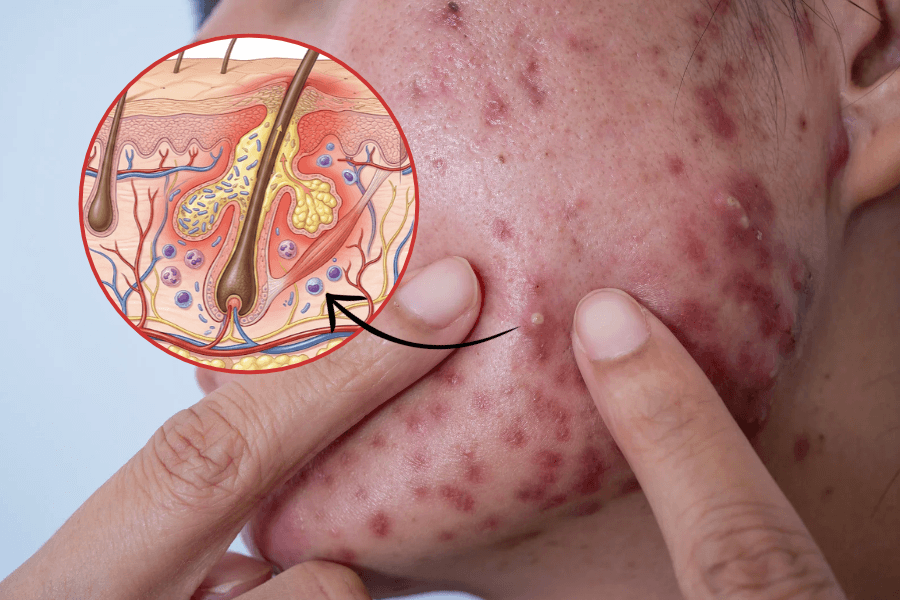
Acne is thought to start with four things going on inside a pore:
- Too much oil. Oil glands make more sebum than usual. Hormones often set this off.
- Blocked pores. Dead skin cells don’t shed the way they should. They build up and form a plug.
- Skin bacteria. Cutibacterium acnes (C. acnes) normally lives on the skin and can contribute to inflammation within acne-affected follicles.
- Redness and swelling. The body reacts, and the spot turns red, raised and sore.
Triggers push one or more of these along. Hormones can boost oil. Heavy creams can add to blocked pores. Stress may make swelling worse. When considering what may be contributing to your acne, it’s useful to look at how these processes interact and whether factors such as hormones, skincare or friction may be playing a role.
Common acne triggers to look at
Hormonal acne
Androgens are hormones present in people of all sexes. They can stimulate the skin’s oil glands, contributing to increased sebum production and acne. That’s partly why acne so often starts in the teens. In adults, hormonal influences may contribute to acne. Some patterns that can be relevant include:
- Spots mostly on the lower face, jaw, chin and neck
- Deep, sore lumps more than blackheads
- Flare-ups that line up with your cycle
- Acne that began or changed after you stopped or switched the pill
Wondering how to tell if your acne is hormonal? Those patterns are a good first clue. Some people also have irregular periods, extra hair on the face or body, or thinning hair on the scalp. Some people with acne also experience irregular periods, increased facial or body hair, or thinning hair on the scalp. These symptoms can have several causes, including polycystic ovary syndrome (PCOS). If you notice these changes alongside acne, consider discussing them with your doctor.
Stress acne
Does stress cause acne? Not on its own. But it has been linked to flare-ups. Stress may contribute to acne flare-ups, although the relationship is complex and varies between individuals.
Stress changes what we do, too. Less sleep. Skipped skincare. More touching and picking. If you notice flare-ups around exams, deadlines or other stressful periods, recording these patterns may help you identify possible associations.
Acne and diet
Food is one of the most argued-about triggers. Some studies suggest that high-sugar, fast-digesting foods may make acne worse for some people. Think white bread, soft drinks and packaged snacks. Dairy, mainly skim milk, has also been linked to breakouts in a few studies.
Still, the research isn’t strong enough for hard rules. And cutting out whole food groups without advice isn’t a good idea. A food and skin diary kept over several weeks may help you notice patterns, although it cannot establish that a particular food is causing your acne.
Skincare and makeup
Can skincare cause breakouts? It can. Some skincare, makeup and hair products may contribute to clogged pores in susceptible people. Products labelled non-comedogenic may be worth considering if you are prone to acne. Spots along the hairline or forehead are often tied to hair products.
Piling on lots of active products at once can also upset the skin. If your acne started or worsened after introducing a new product, consider whether it could be contributing. Other factors may also explain the change.
Medicines
Some medicines can trigger or worsen acne-like breakouts in certain people. Examples include corticosteroids, lithium and some medicines used to treat epilepsy. Hormonal contraceptives can also influence acne, depending on the formulation and individual response. Please don’t stop or change a prescribed medicine on your own. Talk to the doctor who prescribed it.
Rubbing and pressure
Helmets, chin straps, phones, backpack straps and face masks can trap heat and sweat on the skin. Acne caused this way shows up right where the contact is. A pattern that follows areas of repeated contact may suggest friction or pressure is contributing, although location alone cannot confirm the cause.
What does acne location mean?
You may have seen “face maps” online. They claim chin acne points to your gut, or forehead spots point to your liver. There’s no good science behind those claims.
Where your spots sit can still prompt a few useful questions:
- Jaw and chin: often linked with hormonal acne
- Forehead and hairline: think hair products, fringes or hats
- One cheek more than the other: think phone, pillowcase and the side you sleep on
- Back and chest: think sweat, tight clothes, or shampoo running down your skin in the shower
Use location as a starting point for questions. It isn’t a diagnosis.
When it might not be acne at all
Not every bump is acne. Malassezia folliculitis, sometimes called “fungal acne”, can cause clusters of small, similar-looking itchy bumps, often on the chest, back or forehead. It can resemble acne, but its causes and management differ from those of acne vulgaris.
Rosacea can cause redness and pimple-like bumps, but it has its own triggers and care. Perioral dermatitis shows up as clusters of small bumps around the mouth and nose.
Identifying the underlying skin condition is an important step in deciding which management options may be appropriate. That’s one reason a doctor’s view helps when you’re not sure what you’re dealing with.
How to start your own acne root cause identification
You can gather plenty of useful details before you see anyone. For six to eight weeks, keep track of:
- Where the spots appear, and what they look like: blackheads, whiteheads, red bumps or deep lumps
- When they flare: your cycle, stressful weeks, travel, a change in the weather
- What changed just before: a new product, a new medicine, a new diet, more training, new sports gear
- Everything you use: hair, body and makeup products as well as skincare
- Family history: acne can run in families, so note whether close relatives have experienced it
Take a photo once a week in the same light. Taking photos in consistent lighting may help you compare changes over time and provide useful context if you seek medical advice. Your notes and photos will also come in handy if you decide to see a doctor about your acne root cause identification.
Why is my acne not going away?
There are a few common reasons acne hangs around:
- It hasn’t been long enough. Many acne treatments take several weeks before you can judge them fairly. A doctor can tell you what’s a sensible timeframe for you.
- The product doesn’t suit the acne. Something made for blackheads may not suit deep, red breakouts.
- Contributing factors may remain. These could include a product that doesn’t suit your skin, a medicine-related effect or hormonal influences.
- It’s not acne. Something else may look like it.
- Too many products. Using too much can irritate the skin and make redness worse.
If your acne persists or keeps returning despite trying appropriate over-the-counter products, a healthcare professional may be able to assess the condition and discuss other management options.
When to see a doctor about acne
Tracking your skin is a great start. Some cases need a doctor’s assessment, though. Think about booking in if:
- Your acne hasn’t improved despite using appropriate over-the-counter treatments for the recommended period
- You have deep, painful lumps or cysts
- Your acne leaves dark marks or scars
- Your acne started suddenly as an adult, or comes with irregular periods or unusual hair growth
- You think a medicine might be playing a part
- Your skin is affecting your confidence, mood or daily life
A doctor can review your medical history, assess your skin and consider whether further investigations, such as hormone testing, are appropriate. Their assessment can help guide management options based on your symptoms and individual circumstances.
Considering an online acne consultation?
Acne Express offers online consultations for people seeking advice about acne and related skin concerns. Your notes and photos may provide useful background for the consultation. A clinician will assess whether your concerns are suitable for telehealth and discuss management options based on your individual circumstances. An in-person assessment may be recommended if further examination is needed.
Getting to the bottom of your breakouts
Acne is common and can have several contributing factors, including hormonal influences, stress, skincare products, certain medicines, friction and family history. Acne root cause identification involves looking for patterns that may help explain your breakouts, while recognising that a single cause may not always be identifiable.
Start by watching your own skin. Look for patterns. Give any change a fair trial. And if things aren’t getting better, or something feels off, a doctor can help you understand what may be behind your breakouts.
Disclaimer: This article is general information only. It isn’t a substitute for personal medical advice. Please speak with a qualified health professional about your own situation.