A black pimple tends to get attention in a way a regular spot doesn’t. The colour alone is enough to make most people stop and wonder whether it’s something to be concerned about — or whether it’s just a blackhead that looks worse than it is.
The answer depends on the underlying cause. Most black pimples have a fairly ordinary explanation and may improve with appropriate treatment. Some, however, should be professionally assessed — particularly if they’re persistent, painful, or changing in appearance.
This article breaks down what black pimples actually are, what causes them, how they differ from other skin concerns, and when an online skin doctor consultation is the right next step.
What is a black pimple?
The term black pimple can refer to several different things depending on what’s actually happening at the skin level.
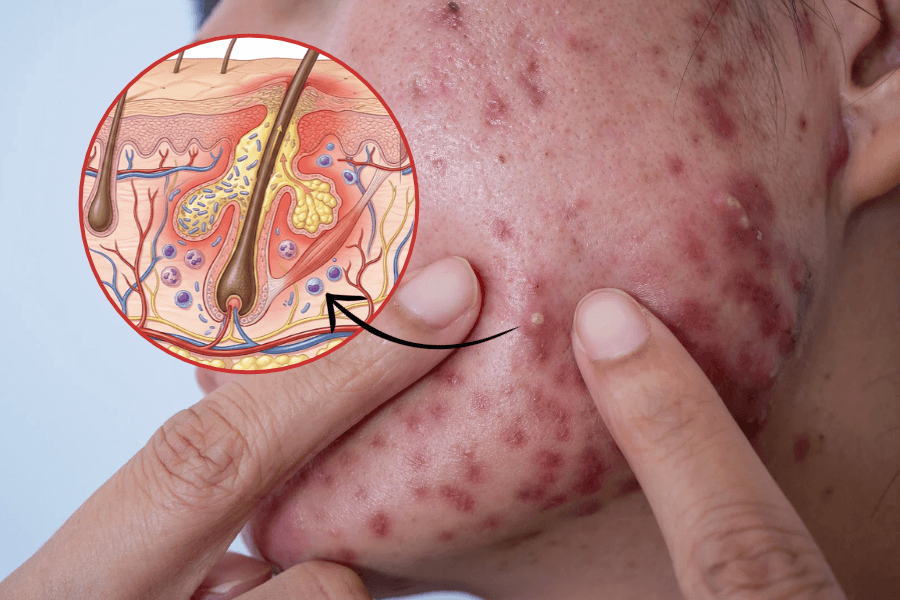
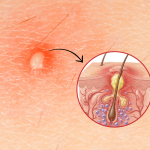
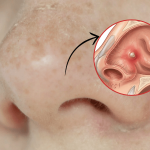
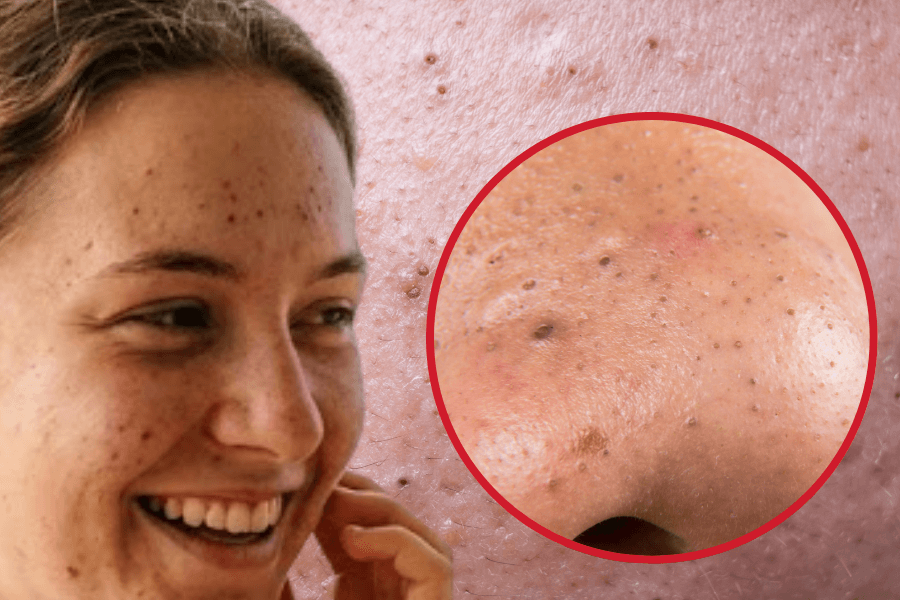
The most common explanation is an open comedone — more widely known as a blackhead. When a pore becomes blocked with sebum and dead skin cells and the top remains open, exposure to air causes the contents to oxidise. That oxidation is what produces the dark colour. The dark colour is not caused by dirt. It’s a chemical reaction between the sebum and oxygen.
A black pimple can also refer to an inflamed acne lesion — a papule or pustule — where the surrounding skin has darkened due to post-inflammatory hyperpigmentation. In this case the pimple itself may have resolved, but the dark mark it leaves behind creates the appearance of a black or very dark spot on the skin.
Less commonly, what looks like a black pimple may be a deeply blocked pore, a sebaceous cyst, or in some cases a skin concern that sits outside the category of acne entirely. Black pimples are a recognised presentation of acne and very common across all skin types. For a general overview of acne in Australia, Healthdirect offers a reliable government-backed reference. Professional assessment may be appropriate — particularly if the lesion is new, changing, or does not resemble typical acne lesions.
What causes black pimples on the face and body?
Several factors contribute to the development of black pimples, and for most people multiple contributing factors are commonly involved.
Excess sebum production is the starting point for most acne-related blockages. When the skin produces more oil than the pores can clear, the excess combines with dead skin cells and begins to accumulate. Hormonal fluctuations — across the menstrual cycle, during pregnancy, or as a result of conditions like polycystic ovary syndrome — are a common driver of excess sebum production in adults.
Pore congestion develops when that build-up isn’t cleared effectively. Skin that isn’t being exfoliated regularly, or that’s being exposed to heavy or comedogenic products, is more susceptible to this kind of congestion.
Skin trauma and inflammation can trigger post-inflammatory hyperpigmentation — the dark marks that remain after a pimple heals. People with medium to deeper skin tones tend to experience more pronounced hyperpigmentation, though it affects all skin types to varying degrees.
Picking and squeezing may worsen this process. Interfering with a pimple pushes bacteria deeper, increases inflammation, and makes post-inflammatory darkening considerably worse. It’s a common cause of a temporary spot into a longer-term dark mark.
Sun exposure without adequate SPF doesn’t cause black pimples directly, but it does deepen existing hyperpigmentation and may slow the fading process.
Black pimple vs blackhead: what’s the difference?
These conditions are related but clinically different.
A blackhead is specifically an open comedone — a blocked pore where the surface is open and oxidation has caused darkening. Blackheads are generally flat or very slightly raised, with a visible dark centre. They’re not inflamed, and they’re typically not painful.
A black pimple, in the broader sense, may involve inflammation, infection, or post-inflammatory changes that a standard blackhead doesn’t. A deep, painful lump with a dark surface isn’t a blackhead — it’s likely an inflamed lesion with hyperpigmentation, or possibly a cyst that may require a different treatment approach.
The distinction matters for treatment. What works for a blackhead — salicylic acid, regular exfoliation, appropriate cleansing — isn’t necessarily what works for an inflamed lesion or a cyst. Treating them the same way may worsen symptoms in some cases.
Black pimple vs mole vs melanoma: when to take it seriously
This is a question worth addressing directly because the concern comes up often.
Most black pimples are acne-related and have a clear explanation. They tend to appear in areas prone to breakouts — the face, neck, chest, and back — and they change in appearance over days or weeks as a normal acne lesion would.
A mole is a pigmented skin lesion that remains relatively stable over time. It has defined edges, consistent colour, and doesn’t behave like a pimple. Moles don’t typically appear suddenly, and they don’t produce pus or respond to acne treatment.
Melanoma is a form of skin cancer that can sometimes resemble a dark lesion on the skin surface. Key warning signs include asymmetry, irregular or poorly defined borders, uneven or multiple colours, a diameter larger than 6mm, and any evolution in size, shape, or colour over time. These are covered under the widely used ABCDE framework used by dermatologists.
If something on your skin doesn’t behave like a pimple — it doesn’t change the way acne does, it’s growing, it bleeds without cause, or it simply doesn’t look right — get it assessed in person. An online skin consultation can be a useful first step for many acne concerns, but suspicious lesions require physical examination by a qualified practitioner.
Treatment options for black pimples
For most people, black pimples may improve with a consistent, targeted skincare routine combined with patience. The Better Health Channel outlines treatment options for acne including ingredient-level guidance that complements a professional skin consultation.
Salicylic acid is a commonly used ingredient for congestion and blackheads. It’s oil-soluble, which means it can penetrate the pore lining and break down the sebum and debris causing the blockage. It also has mild anti-inflammatory properties that may help reduce redness around active lesions.
Niacinamide may help regulate sebum production over time and can support the management of post-inflammatory hyperpigmentation — the dark marks that remain after a pimple heals.
Azelaic acid is another option may also be considered for both active acne and dark marks. It may help fade hyperpigmentation and has antibacterial properties that can support the management of inflamed acne.
Retinoids — including over-the-counter retinol and prescription-strength options — work by increasing cell turnover, which helps clear congestion and may reduce the appearance of dark marks over time. These are often introduced gradually and are not appropriate for everyone. A skin consultation is advisable before starting a retinoid, particularly at prescription strength.
Daily SPF is strongly recommended if hyperpigmentation is a concern. Sun exposure significantly slows the fading of dark marks. A broad-spectrum SPF 30 or higher, used every morning, is commonly recommended for managing hyperpigmentation.
What to avoid: squeezing, picking, and attempting to extract deep or inflamed lesions at home. The short-term satisfaction may increase the risk of pigmentation and scarring.
When to see an online skin doctor for black pimples
Most black pimples don’t require urgent attention. But there are situations where professional input may be beneficial — and waiting months for an in-person dermatologist appointment may not always be accessible.
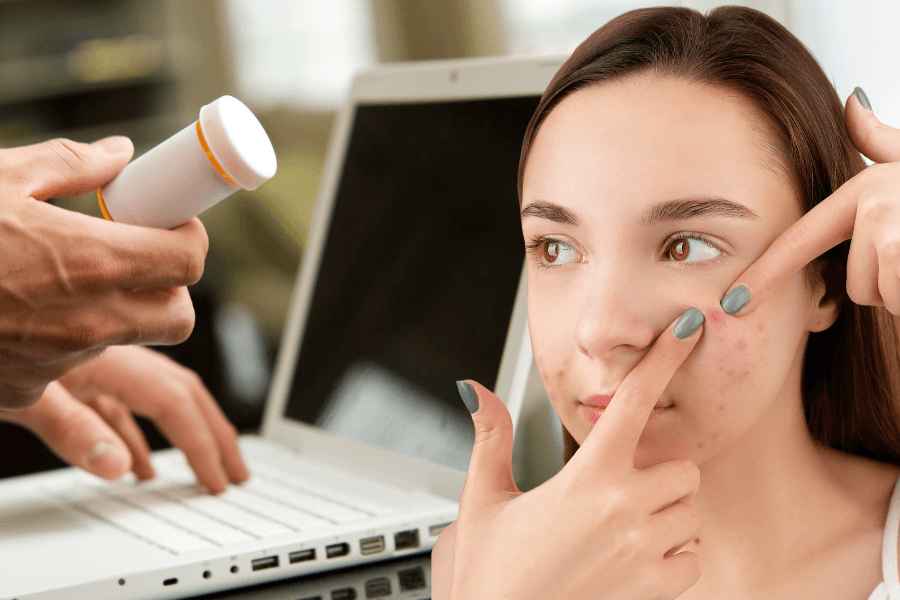
A telehealth skin consultation with an AHPRA-registered practitioner may be appropriate if your black pimples are persistent, spreading, or not responding to over-the-counter treatment. It’s also appropriate if you’re dealing with significant post-inflammatory hyperpigmentation, or if you’re unsure whether what you’re looking at is acne-related or something else entirely.
At Acne Express, same day online skin consultations may be available with AHPRA-registered practitioners — no GP referral required. Practitioners can provide assessment and management recommendations based on your presentation based on your specific skin concern, .
You can learn more about online consultation options if professional assessment is needed.
A black pimple tends to get attention in a way a regular spot doesn’t. The colour alone is enough to make most people stop and wonder whether it’s something to be concerned about — or whether it’s just a blackhead that looks worse than it is.
The answer depends on the underlying cause. Most black pimples have a fairly ordinary explanation and may improve with appropriate treatment. Some, however, should be professionally assessed — particularly if they’re persistent, painful, or changing in appearance.
This article breaks down what black pimples actually are, what causes them, how they differ from other skin concerns, and when an online skin doctor consultation is the right next step.
What is a black pimple?
The term black pimple can refer to several different things depending on what’s actually happening at the skin level.
The most common explanation is an open comedone — more widely known as a blackhead. When a pore becomes blocked with sebum and dead skin cells and the top remains open, exposure to air causes the contents to oxidise. That oxidation is what produces the dark colour. The dark colour is not caused by dirt. It’s a chemical reaction between the sebum and oxygen.
A black pimple can also refer to an inflamed acne lesion — a papule or pustule — where the surrounding skin has darkened due to post-inflammatory hyperpigmentation. In this case the pimple itself may have resolved, but the dark mark it leaves behind creates the appearance of a black or very dark spot on the skin.
Less commonly, what looks like a black pimple may be a deeply blocked pore, a sebaceous cyst, or in some cases a skin concern that sits outside the category of acne entirely. Black pimples are a recognised presentation of acne and very common across all skin types. For a general overview of acne in Australia, Healthdirect offers a reliable government-backed reference. Professional assessment may be appropriate — particularly if the lesion is new, changing, or does not resemble typical acne lesions.
What causes black pimples on the face and body?
Several factors contribute to the development of black pimples, and for most people multiple contributing factors are commonly involved.
Excess sebum production is the starting point for most acne-related blockages. When the skin produces more oil than the pores can clear, the excess combines with dead skin cells and begins to accumulate. Hormonal fluctuations — across the menstrual cycle, during pregnancy, or as a result of conditions like polycystic ovary syndrome — are a common driver of excess sebum production in adults.
Pore congestion develops when that build-up isn’t cleared effectively. Skin that isn’t being exfoliated regularly, or that’s being exposed to heavy or comedogenic products, is more susceptible to this kind of congestion.
Skin trauma and inflammation can trigger post-inflammatory hyperpigmentation — the dark marks that remain after a pimple heals. People with medium to deeper skin tones tend to experience more pronounced hyperpigmentation, though it affects all skin types to varying degrees.
Picking and squeezing may worsen this process. Interfering with a pimple pushes bacteria deeper, increases inflammation, and makes post-inflammatory darkening considerably worse. It’s a common cause of a temporary spot into a longer-term dark mark.
Sun exposure without adequate SPF doesn’t cause black pimples directly, but it does deepen existing hyperpigmentation and may slow the fading process.
Black pimple vs blackhead: what’s the difference?
These conditions are related but clinically different.
A blackhead is specifically an open comedone — a blocked pore where the surface is open and oxidation has caused darkening. Blackheads are generally flat or very slightly raised, with a visible dark centre. They’re not inflamed, and they’re typically not painful.
A black pimple, in the broader sense, may involve inflammation, infection, or post-inflammatory changes that a standard blackhead doesn’t. A deep, painful lump with a dark surface isn’t a blackhead — it’s likely an inflamed lesion with hyperpigmentation, or possibly a cyst that may require a different treatment approach.
The distinction matters for treatment. What works for a blackhead — salicylic acid, regular exfoliation, appropriate cleansing — isn’t necessarily what works for an inflamed lesion or a cyst. Treating them the same way may worsen symptoms in some cases.
Black pimple vs mole vs melanoma: when to take it seriously
This is a question worth addressing directly because the concern comes up often.
Most black pimples are acne-related and have a clear explanation. They tend to appear in areas prone to breakouts — the face, neck, chest, and back — and they change in appearance over days or weeks as a normal acne lesion would.
A mole is a pigmented skin lesion that remains relatively stable over time. It has defined edges, consistent colour, and doesn’t behave like a pimple. Moles don’t typically appear suddenly, and they don’t produce pus or respond to acne treatment.
Melanoma is a form of skin cancer that can sometimes resemble a dark lesion on the skin surface. Key warning signs include asymmetry, irregular or poorly defined borders, uneven or multiple colours, a diameter larger than 6mm, and any evolution in size, shape, or colour over time. These are covered under the widely used ABCDE framework used by dermatologists.
If something on your skin doesn’t behave like a pimple — it doesn’t change the way acne does, it’s growing, it bleeds without cause, or it simply doesn’t look right — get it assessed in person. An online skin consultation can be a useful first step for many acne concerns, but suspicious lesions require physical examination by a qualified practitioner.
Treatment options for black pimples
For most people, black pimples may improve with a consistent, targeted skincare routine combined with patience. The Better Health Channel outlines treatment options for acne including ingredient-level guidance that complements a professional skin consultation.
Salicylic acid is a commonly used ingredient for congestion and blackheads. It’s oil-soluble, which means it can penetrate the pore lining and break down the sebum and debris causing the blockage. It also has mild anti-inflammatory properties that may help reduce redness around active lesions.
Niacinamide may help regulate sebum production over time and can support the management of post-inflammatory hyperpigmentation — the dark marks that remain after a pimple heals.
Azelaic acid is another option may also be considered for both active acne and dark marks. It may help fade hyperpigmentation and has antibacterial properties that can support the management of inflamed acne.
Retinoids — including over-the-counter retinol and prescription-strength options — work by increasing cell turnover, which helps clear congestion and may reduce the appearance of dark marks over time. These are often introduced gradually and are not appropriate for everyone. A skin consultation is advisable before starting a retinoid, particularly at prescription strength.
Daily SPF is strongly recommended if hyperpigmentation is a concern. Sun exposure significantly slows the fading of dark marks. A broad-spectrum SPF 30 or higher, used every morning, is commonly recommended for managing hyperpigmentation.
What to avoid: squeezing, picking, and attempting to extract deep or inflamed lesions at home. The short-term satisfaction may increase the risk of pigmentation and scarring.
When to see an online skin doctor for black pimples
Most black pimples don’t require urgent attention. But there are situations where professional input may be beneficial — and waiting months for an in-person dermatologist appointment may not always be accessible.
A telehealth skin consultation with an AHPRA-registered practitioner may be appropriate if your black pimples are persistent, spreading, or not responding to over-the-counter treatment. It’s also appropriate if you’re dealing with significant post-inflammatory hyperpigmentation, or if you’re unsure whether what you’re looking at is acne-related or something else entirely.
At Acne Express, same day online skin consultations may be available with AHPRA-registered practitioners — no GP referral required. Practitioners can provide assessment and management recommendations based on your presentation based on your specific skin concern, .
You can learn more about online consultation options if professional assessment is needed.
FAQs
In most cases, it’s oxidised sebum — the skin’s natural oil — combined with dead skin cells. When a blocked pore is open at the surface, exposure to air causes this mixture to darken. It’s often mistaken for dirt, but washing more frequently is unlikely to resolve it. The blockage needs to be addressed at the pore level.
A few things can cause this. The most common is oxidation of a blocked pore — a standard blackhead forming. It can also be post-inflammatory hyperpigmentation developing around or after an inflamed pimple. If a lesion is turning black and you’re not sure why, or it doesn’t behave like typical acne, it’s worth getting a professional assessment.
Yes. Black pimples are most commonly open comedones — blackheads — or inflamed lesions where pigmentation has darkened the skin around the spot. They’re a recognised presentation of acne and very common, particularly in areas with higher sebum production like the nose, chin, and forehead.
Most black pimples are not dangerous. They’re typically a form of acne or blocked pore that responds to appropriate skincare. However, any lesion that is growing, bleeding, changing rapidly, or doesn’t behave like typical acne should be assessed by a qualified practitioner in person.
A standard black pimple caused by acne is not cancerous. However, some forms of skin cancer — particularly melanoma — can present as dark lesions on the skin. If a dark spot on your skin has irregular borders, uneven colour, is growing, or doesn’t fit the pattern of a typical pimple, see a practitioner for an in-person assessment. Don’t attempt to self-diagnose.
They can leave marks that persist for months, but with the right treatment approach these are generally not permanent. Post-inflammatory hyperpigmentation fades over time — more quickly with consistent SPF use and targeted ingredients like niacinamide or azelaic acid. Deep picking or squeezing significantly increases the risk of longer-lasting pigmentation.
Blackheads can persist for a long time without treatment because the blockage doesn’t resolve the way an inflamed pimple does. With appropriate skincare — particularly salicylic acid and regular exfoliation — they may improve over time. Inflamed black pimples may resolve on their own but often leave hyperpigmentation behind that requires treatment.
If a black pimple is painful, growing, has been present for several weeks without change, looks different from your usual breakouts, or sits alongside other symptoms, it’s worth getting a professional opinion. An online skin doctor consultation is a practical first step for most acne-related concerns — you don’t need a GP referral and same day appointments may be available.
Disclaimer: This article is intended for general informational purposes only and does not constitute medical advice. Please consult a qualified health practitioner for advice specific to your individual condition.