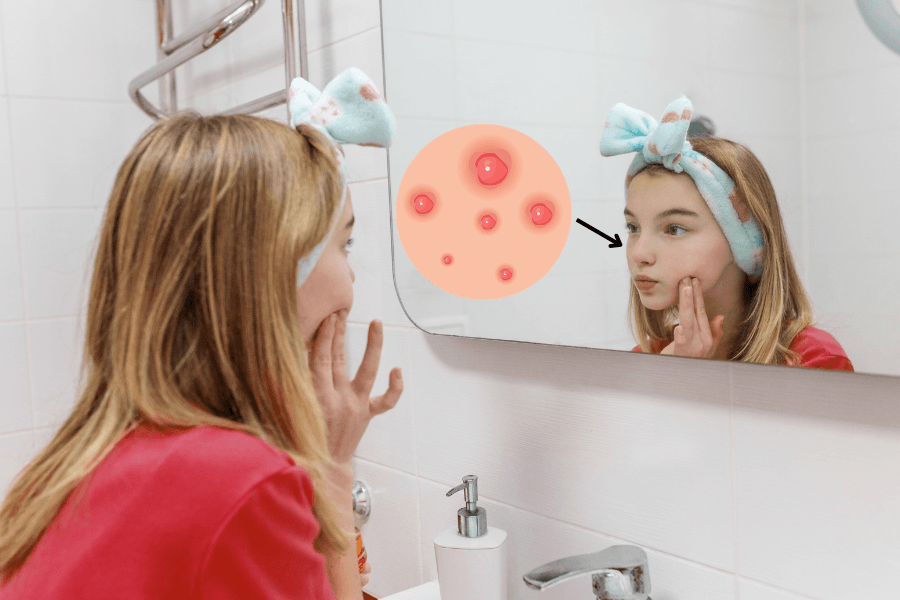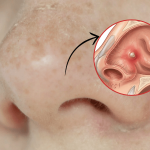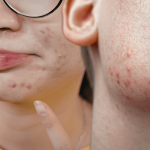
Most pimples run their course in about a week without much drama. Then there’s the one that doesn’t play by those rules — it swells, goes red, and hurts more than a breakout has any business hurting. That’s usually the first clue you’re dealing with an infected pimple, and it’s worth understanding what’s actually going on before you decide how to treat it.
Below is what tends to cause it, how to spot the difference between this and a normal breakout, what actually helps at home, and where home care stops being enough.
What Is an Infected Pimple?
A standard pimple starts the same way most breakouts do — oil, dead skin, and bacteria clog a pore, the immune system deals with it in the background, and it clears up without you needing to do much of anything.
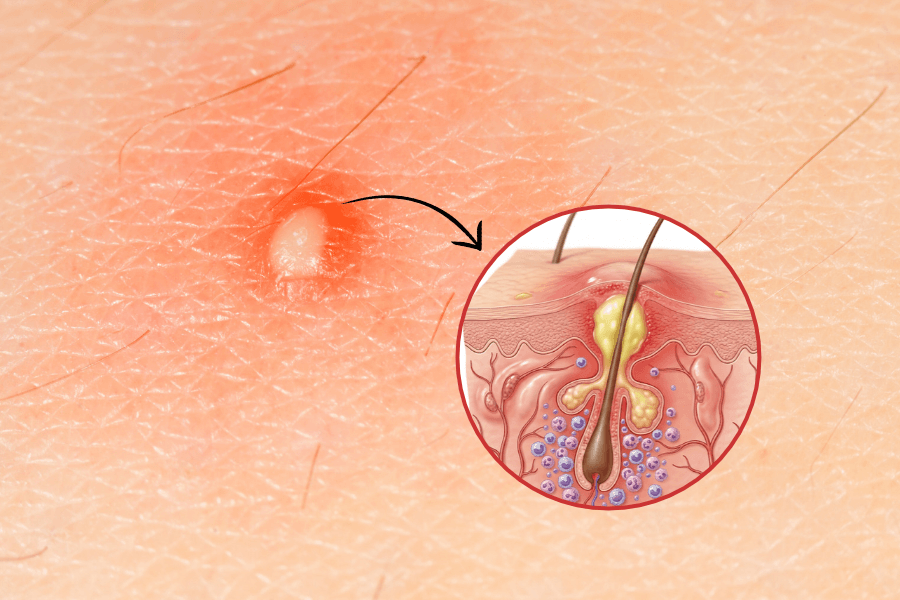
An infected pimple takes a different path. The bacteria already sitting on your skin get the upper hand, multiplying faster than your body can keep pace with, and the inflammatory response ramps up in return. What you end up with is bigger, angrier, and slower to fade than a typical whitehead or blackhead. Occasionally what looks like a bad pimple is actually something closer to a small boil, or a cystic acne infection sitting deeper under the surface — and that changes how it should be handled.
Signs and Symptoms of an Infected Pimple
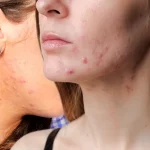
At first glance, an infected pimple can look a lot like ordinary acne. A few things usually give it away:
Redness and swelling that keep spreading rather than staying put is one of the earliest tells. So is pain that feels disproportionate to how small the bump actually looks — a pus filled pimple that throbs, or feels warm just from resting a hand near it. Speaking of warmth, that often shows up before any real swelling is visible. The discharge itself is another clue: yellow or green pus reads very differently to the thin whitish fluid you’d expect from a normal whitehead.
Then there’s timing. A pimple with white head not healing after several days — despite whatever spot treatment you’ve thrown at it — isn’t behaving like a normal blemish anymore. And in more serious cases, fever or just generally feeling unwell can creep in alongside the local symptoms.
If a painful pimple under skin hasn’t budged in a few days, or seems to be heading in the wrong direction, that’s not something to just wait out.
What Causes an Infected Pimple
Picking, popping, or squeezing tops the list by a wide margin. Once a pimple is already inflamed, trying to pop an infected pimple safely usually isn’t realistic — the pressure just drives bacteria further into the surrounding tissue instead of getting rid of it.
Hygiene plays a role too. Unwashed hands, makeup brushes that haven’t been cleaned in a while, pillowcases going too long between washes — none of it causes infection on its own, but all of it raises the odds. Ingrown hairs are another common culprit, especially along the jawline or neck, where bacteria can work their way into the follicle and turn into infected acne. A weakened or otherwise compromised immune response doesn’t help either, since it gives bacterial growth more room to get out of hand.
And occasionally it’s simply the bacteria itself being more aggressive than usual — a genuine bacterial skin infection acne case, or in rarer instances, a staph infection pimple that’s progressing faster than ordinary acne would.
Infected Pimple vs Boil: How to Tell the Difference
Both look red, swollen, and painful, so mixing up a badly infected pimple with a boil is an easy mistake to make. What actually separates them is depth and origin. A pimple, even an infected one, stays relatively close to the surface because it started in a pore. A boil forms deeper around a hair follicle and tends to build a firmer core before coming to a head. If something feels unusually deep, looks bigger than a normal pimple has any right to be, or keeps coming back in the exact same spot, that’s worth having checked rather than guessed at.
How to Treat an Infected Pimple Safely
Resisting the urge to pop it is, honestly, the hardest and most important part. Past that, there are a few things that genuinely help while the skin sorts itself out.
A warm compress held against the area for 10–15 minutes, a few times a day, helps things come to a head naturally and takes care of reducing swelling from a pimple without anyone needing to touch it. Keep the area clean with a gentle cleanser — nothing abrasive, since scrubbing an already-inflamed spot tends to make it worse rather than better. Touching or picking at it should be off the table entirely, tempting as it is. A spot treatment containing benzoyl peroxide or salicylic acid can deal with surface bacteria without resorting to physical extraction, and swapping pillowcases and towels more often during this stretch cuts down on reintroducing bacteria to the area.
None of this replaces actual medical treatment once a lesion has crossed over from inflamed to properly infected — it just buys time and comfort while things settle.
When to See a Doctor for a Pimple
Basic care clears up most infected pimples within a few days. A handful of signs, though, suggest it’s time to stop managing this yourself.
If the area keeps expanding instead of calming down, or the pain gets sharper and the swelling starts spreading outward, that’s one signal. Red streaking around the lesion is another — it can mean the infection is tracking through the tissue nearby, which is the pattern behind cellulitis from pimple in its more advanced form. Fever, chills, or just feeling generally off is a third. And a pimple that keeps coming back in the same spot no matter what you try has stopped being a one-off skin issue.
Any of those on their own is reason enough to stop pushing through with home treatment and get it looked at properly. This is exactly the kind of situation Acne Express was built for — an online acne treatment service that puts you in front of a clinician quickly, with same-day appointments, so there’s no sitting on a waitlist while things get worse. A clinician can work out whether antibiotics are actually needed, check whether it’s a bacterial skin infection acne case that’s more serious than it appears, and rule out the possibility that what looks like a pimple is something else altogether.
Building Better Habits to Prevent Future Infections
Consistency does more for skin, long term, than any single product applied after a breakout has already gone wrong. An acne skincare routine for breakouts built around washing twice daily, going easy on exfoliation, changing pillowcases regularly, and simply not picking will cut down on how often a normal pimple tips over into an infected one. Anyone who deals with breakouts often is usually better off with medical-grade skincare recommended by a dermatologist than working through products by trial and error.
Conclusion
Treating an infected pimple like a regular breakout is usually exactly what makes it stick around longer than it should. Warm compresses, gentle cleansing, and simply leaving it alone cover most cases — but once swelling keeps spreading, redness won’t settle, or fever shows up, that’s the point to stop self-treating. Waiting around to see whether an infected pimple sorts itself out is the wrong bet when it’s this easy to get real help — Acne Express puts a proper consultation just a short online booking away, with no waitlist standing between you and treatment.
Disclaimer: This article is general information only and isn’t a substitute for personalised medical advice. If you’re concerned about your teenager’s skin, speak with a registered health professional.