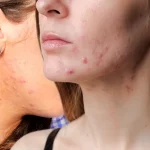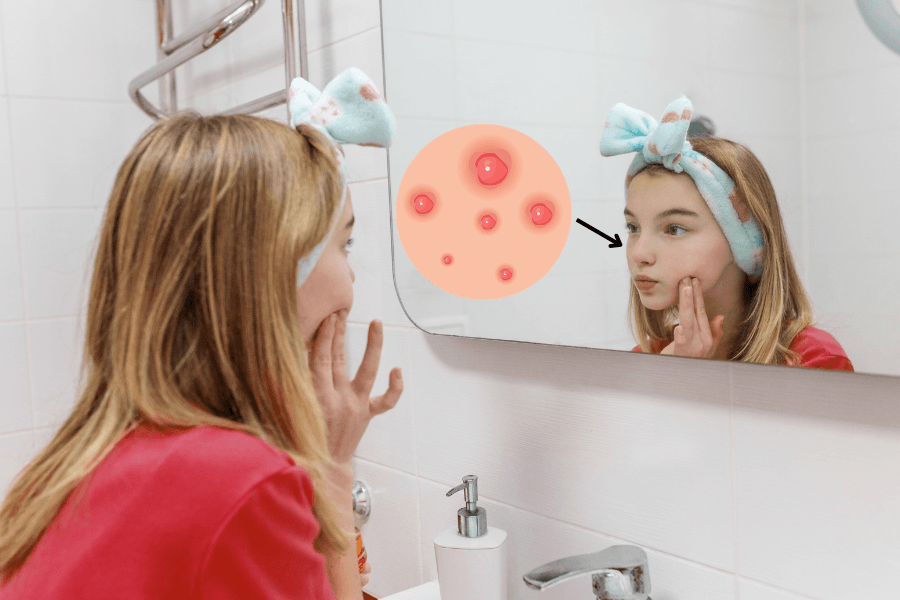
Somewhere between the growth spurts and the voice cracking, acne shows up too. For a lot of teenagers it doesn’t just show up and leave — it sticks around, often right where they don’t want it: across the forehead, along the jaw, right before a school photo. And it rarely comes with a clean explanation. Parents end up asking the same thing, over and over: what’s actually causing this?
Puberty is a major contributing factor, although several biological and environmental factors can also influence teenage acne. Here’s what’s actually going on, how teenage acne differs from the adult kind, and what genuinely helps versus what’s just noise.
Just how common is teenage acne?
Very common. Teenage acne is very common during puberty — a few stray breakouts before a formal, others fighting it more or less constantly through high school. Acne is not necessarily a reflection of poor hygiene or inadequate skincare whatever a teenager might be telling themselves at 2 am in front of the bathroom mirror. Raising Children Network lists it as one of the most common skin conditions in this age group, which tracks with pretty much anyone’s high school experience.
That doesn’t mean it should just be shrugged off, though.More severe or persistent acne can lead to permanent scarring. And at an age where appearance already feels like it’s under a microscope, the knock to confidence is real too — not something to dismiss as “just a phase.”
What causes teenage acne?
Hormonal changes during puberty
Hormonal changes during puberty are a major contributor to teenage acne. Puberty triggers a rise in hormones called androgens, and androgens tell the skin’s oil glands to ramp up production. More oil, more chance of a pore getting blocked — and Blocked pores are an important part of how acne develops. It’s basically the same hormonal wave responsible for every other puberty milestone, just showing up on the skin instead.
Early on, this tends to concentrate around the forehead, nose, and chin. Give it a bit of time and it can spread to the jaw, chest, and back too.
Excess oil and clogged pores
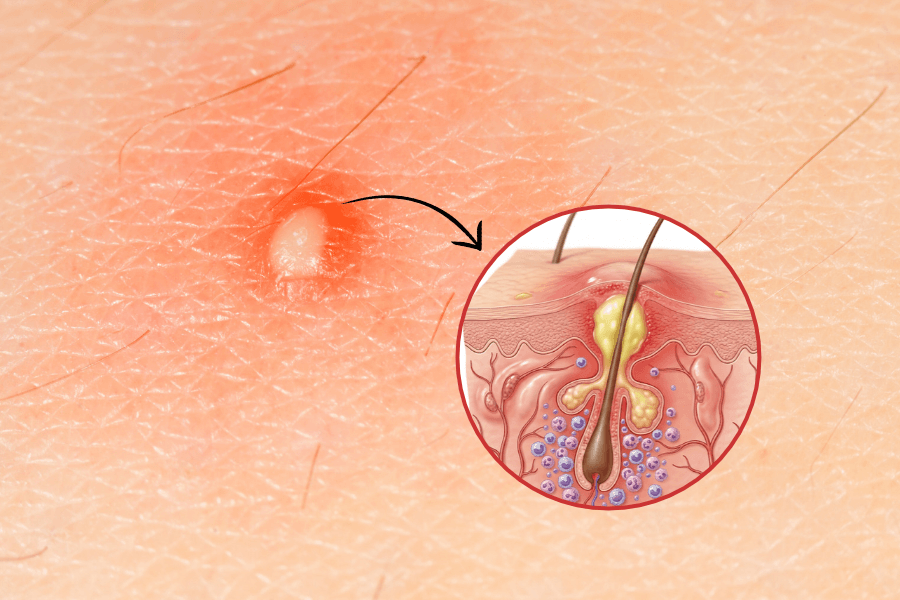
Once oil production picks up, dead skin cells that would normally shed off on their own get trapped instead. Mix that with the extra oil, and you’ve got a plug sitting inside the pore — which is where whiteheads and blackheads start, and inflammation can then develop, contributing to red and sometimes painful acne lesions.
Bacteria and inflammation
Skin carries bacteria naturally, no way around that. But inside a blocked, oily pore, certain bacteria multiply far more than they otherwise would, and that’s what turns a simple clogged pore into something red and sore. In some cases it goes deeper still — cysts under the skin, which take a lot longer to settle than a surface pimple.
Genetics
If a parent had noticeable acne as a teen, a family history of acne may increase the likelihood of developing acne. It doesn’t explain everything on its own — plenty of exceptions exist — but it does go some way toward explaining why two teenagers on near-identical routines can end up with completely different skin.
Diet
This one gets debated a lot, and for good reason — the science isn’t as tidy as some corners of the internet make it sound. Some research has identified an association between certain dietary patterns and acne, although the evidence is not conclusive and individual responses vary. Not everyone reacts the same way though, and it’s rarely the whole story on its own. Healthdirect Australia covers the broader range of factors that play into acne, diet being just one of several.
Stress
Stress won’t cause acne by itself, but it’s very good at making existing acne worse. Exam block, social stuff, disrupted sleep — stress and disrupted sleep may contribute to worsening acne in some teenagers. And it cuts both ways: acne adds stress right back, which isn’t exactly the loop anyone wants to be stuck in during Year 11.
Skincare and makeup habits
Teenagers are often trying new products for the first time, and not every product is the right fit. Heavy formulas that clog pores, makeup left on overnight, or — somewhat counterintuitively — washing the face excessively can irritate the skin and may worsen acne symptoms. Identifying these contributing factors may help reduce irritation and breakouts.
Touching the face and sports gear
Phone pressed to the cheek during a call. Chin resting on a hand through a boring class. A sweaty helmet strap after footy training. None of it sounds like much on its own, but repeated daily, repeated friction, occlusion and contact with potentially contaminated surfaces may contribute to skin irritation or acne.
Teenage acne vs adult acne: is it the same thing?
Not really, no. Teenage acne is strongly associated with the hormonal changes of puberty, although other factors can contribute, and tends to sit around the forehead, nose, and chin first. Adult acne behaves differently — it often shows up along the jaw and chin instead, and can be driven by a different hormonal pattern altogether. The underlying mechanics (oil, blocked pores, bacteria) are the same either way, but what triggers it, and treatment options may also differ depending on age, severity and individual circumstances.
How to help teenage acne
Keep the routine simple
Gentle cleanser twice a day, a lightweight non-comedogenic moisturiser, SPF every day — This provides a reasonable foundation for a simple skincare routine. The temptation, once a teen starts researching skincare online, is to add five more products at once. Resist that. Using multiple active products at once may increase irritation.
Resist picking
Picking or squeezing raises the risk of scarring quite a bit, and it’s worth having that conversation early, before it becomes a habit that’s hard to break.
Be patient with treatments
Skin takes its time turning over. Acne treatments often take several weeks of consistent use before improvement becomes apparent, although the timeframe varies depending on the treatment and individual. A lot of teens give up two weeks in, understandably — but that’s rarely long enough to judge whether something’s actually working.
Know when to see a doctor
Mild acne can often be managed initially with appropriate skincare and over-the-counter treatments. Moderate to severe acne, painful cysts, or acne that’s affecting a teenager’s wellbeing or confidence may also warrant professional assessment rather than waiting it out indefinitely. A GP can take it from there and refer on to a dermatologist if needed.
Consider telehealth when access to in-person care is delayed
Wait times for in-person dermatology appointments can vary depending on location, demand and appointment availability, and may be longer in some regional and remote areas. Telehealth may provide an alternative pathway to professional assessment where clinically appropriate. For teenagers who are suitable for remote assessment, consulting from home may also provide a more comfortable setting.
The bottom line
Teenage acne is primarily associated with hormonal changes during puberty, with genetics, oil production, skincare practices and other factors also contributing. It’s common, sure — but common doesn’t mean it has to just be endured in silence. A simple routine, some patience, and knowing when to bring in professional help can help teenagers manage their acne and address concerns about its impact on wellbeing.
Frequently Asked Questions
A rise in androgens during puberty pushes up oil production in the skin, which leads to blocked pores and, from there, breakouts. Same hormonal shift that’s behind most of the other changes happening at the same time.
Could be hormonal, but it’s also worth thinking about what’s changed lately — new skincare or makeup, sports gear, stress, sleep, diet. Sudden isn’t always hormonal on its own; Recent changes to skincare, makeup, sports equipment, stress, sleep or other factors may also contribute.
Not on its own, generally. But some research points to high-sugar and dairy-heavy diets making things worse for certain teens. One piece of the puzzle, not the whole picture.
Hormonal factors can contribute to jawline acne, although friction and other factors may also play a role, though friction from phones or helmet straps, or resting the chin on a hand, can aggravate it further. If it’s persistent and sitting mainly along the jaw, it’s worth getting checked — Persistent jawline acne may warrant assessment to determine whether hormonal or other contributing factors are involved.
Varies a lot from person to person. Some teens are through it in a couple of years, others carry it into their twenties. Appropriate treatment may help manage acne and may reduce the risk of scarring, although the course varies between individuals.
If it’s moderate to severe, leaving scars, not budging after 6–12 weeks of consistent home care, or taking a real toll on confidence — these are reasonable circumstances in which to consider professional assessment.
Disclaimer: This article is general information only and isn’t a substitute for personalised medical advice. If you’re concerned about your teenager’s skin, speak with a registered health professional.