Have you ever stood in front of the acne shelf at the chemist for ten minutes, picked up the same tube three times and still not known what to buy? Most people have. The boxes don’t help. Half of them say "fast-acting", the other half say "gentle", and a few somehow say both.
Most people end up grabbing whatever’s on sale. And a couple of weeks later their face is tight and flaky and the pimples are, well, still there.
A pimple cream only works if what’s in it matches what’s happening on your skin. That sounds simple, but very few people check it before they buy.
First, what’s a pimple cream meant to do?
Here’s a quick bit of biology so the rest of this makes sense.
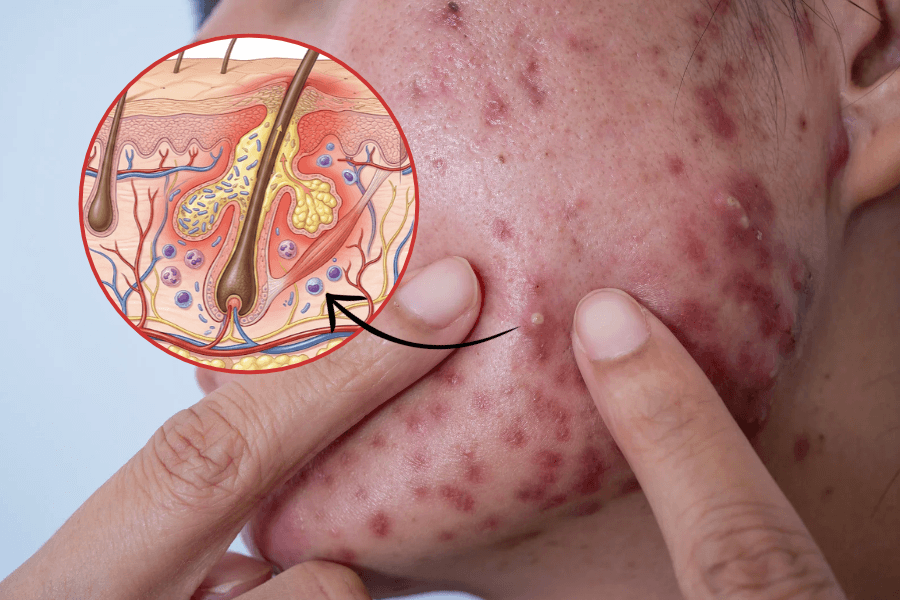
A pimple starts when a pore gets plugged with oil and dead skin. Cutibacterium acnes, bacteria that naturally live on the skin, can contribute to inflammation within the blocked pore. Your immune system notices and sends in reinforcements, and the area swells and goes red. You’ve got a pimple.
Acne creams step in at different points along the way. Some unblock the pore. Some kill off the bacteria. A few calm the redness. Very few do all three well, which is why a cream that cleared up your mate’s skin can do nothing for yours.
Have a proper look at your breakouts
Get a mirror and some decent light (a bathroom with harsh lighting is fine, if a bit brutal).
Small dark dots on your nose or chin are blackheads. The dark colour comes from oil that’s oxidised, not dirt, so scrubbing harder won’t shift it. Little flesh-coloured or white bumps are whiteheads. Both are just blocked pores, and they don’t usually hurt.
Red bumps that are tender to touch are a different thing, whether or not they’ve got a yellowish head. That’s inflammation, so the bacteria are in on it now.
Then there’s the deep stuff. Lumps you can feel more than see, that ache and hang around for weeks. A chemist cream isn’t really going to get down to those, and they’re the ones most likely to scar. Don’t spend a year experimenting on them. Read the section on seeing a dermatologist near the end.
A quick note on jawline breakouts. If they turn up around the same week every month, hormonal changes may be contributing. A cream can calm the spots, but it won’t do anything about the cycle behind them.
The ingredients you’ll actually see on the label
Skip the front of the box. Flip it over and look for the active ingredient, because that’s the bit you’re paying for.
Benzoyl peroxide
Benzoyl peroxide is good for red, angry pimples. It kills acne bacteria inside the pore, and bacteria haven’t been shown to become resistant to it the way they can to antibiotics. Dermatologists have relied on it for decades.
There’s a downside. In the first week or two your skin may dry out and peel a bit, and it’ll probably sting. When you first start using it, your skin may become dry, irritated or peel slightly. It also bleaches fabric, so you might lose a pillowcase or a dark towel and only work out why later. Start at the low end, around 2.5%. Studies comparing strengths found 2.5% worked about as well as 5% and 10% on inflamed pimples, and it caused less irritation than 10%.
Salicylic acid
Salicylic acid is better suited to blackheads, whiteheads and rough, congested skin. It dissolves in oil, so it can work its way into the pore and loosen whatever’s stuck in there. It’s milder than benzoyl peroxide, but it’ll still dry you out if you overdo it.
It isn’t much use on deep, swollen spots. That’s not really what it’s for.
Benzoyl peroxide or salicylic acid?
This is the question everyone asks, and the answer depends on what your skin’s doing. If it’s mainly blackheads and clogged pores, go with salicylic acid. If it’s mainly red, sore pimples, benzoyl peroxide usually does more. If you’ve got both (most people do), a salicylic acid face wash plus benzoyl peroxide on the worst spots is a pretty common setup. Start them a couple of weeks apart. If your skin flares up, you’ll know which one caused it.
Azelaic acid
Azelaic acid is the one nobody talks about. It does a bit of everything: some antibacterial action, some calming, some unclogging. It can also fade the brownish or purple marks pimples leave behind after they’ve gone. It tends to be gentler on sensitive skin, so if everything else stings, it might be worth asking a pharmacist about.
Niacinamide and tea tree oil
Neither is much of a heavy hitter. Niacinamide (vitamin B3) can calm redness and help your skin cope while you’re using something harsher, which is why it often shows up as a supporting ingredient. Tea tree oil has some evidence behind it for mild acne, but it’s slow and some people react to it badly. Natural doesn’t mean gentle. Patch test it.
Your skin type matters as much as the pimple
If your skin gets shiny by lunchtime, you may have oily skin, but that doesn’t necessarily mean it will tolerate stronger ingredients. A light salicylic acid gel tends to suit oily skin well. Look for "non-comedogenic" on the label, which means the formula’s been designed not to block pores. Skip thick, rich creams.
Dry or sensitive skin is trickier. If you use strong actives on it you’ll damage the skin barrier, and then it gets red and tight and, annoyingly, can break out more. A lower-strength benzoyl peroxide product or azelaic acid may be worth considering, alongside a plain moisturiser. Start slowly and monitor how your skin responds. Unscented is best.
Combination skin? Treat it in zones. Stronger product on the forehead and nose, lighter touch on the cheeks. There’s no rule that says your whole face needs the same thing.
Using it without making things worse
Do a patch test first. Rub a bit behind your ear for a few nights before you use it on your face. It’s dull, but it beats finding out the morning of a job interview.
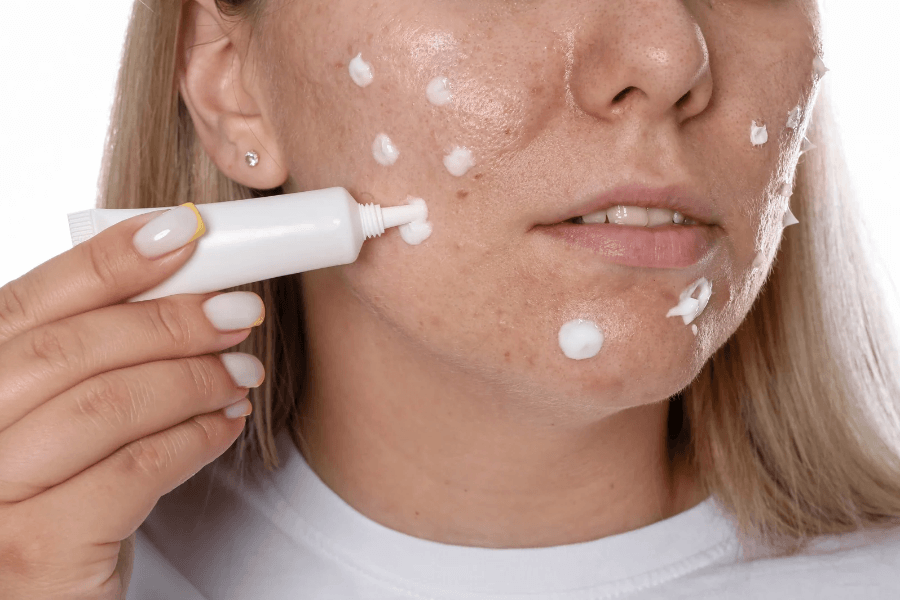
Then ease in. Unless the label says otherwise, every second night for a week or two is plenty, and if your skin’s okay, go nightly after that. Use less than you think you need, too. A thin layer is enough. If you pile it on, you’re mostly just going to peel.
For a random pimple, dabbing a bit on the spot is fine. If you break out in the same patch over and over (chin, forehead, wherever), spread a thin layer over that whole area. You’re getting ahead of the pimples that haven’t surfaced yet.
Keep moisturising. Yes, even if you’re oily. And put on sunscreen every morning, because a lot of acne ingredients make your skin more sensitive to the sun, and UV darkens leftover marks. It’s Australia. SPF 50+.
How long until it works?
Longer than you want, unfortunately.
A single spot might settle in a few days. To know whether a product is actually improving your acne, though, you need around six to eight weeks of steady use, sometimes up to twelve. The pimples that come up today started forming weeks ago, so a cream needs time before you see the difference.
Some people get a bit worse at the start. You’ll hear it called purging. Some acne treatments can cause an initial increase in breakouts, although not every early flare is purging. Persistent irritation or worsening symptoms should be assessed. Burning, swelling, an itchy rash, or pimples somewhere you never normally get them aren’t purging. Stop and get it looked at.
Things that quietly keep acne going
Changing products every fortnight is a big one, because nothing gets a fair go. Using three strong actives together is another, and it gets painful fast. Picking makes it worse too. Everyone does it and everyone knows they shouldn’t, but it can increase inflammation and the risk of scarring. And washing your face five times a day won’t help either. Twice is enough.
When it’s time to see a dermatologist
Chemist creams are fine for mild acne. They’re not meant for everything, though, and you don’t get a medal for putting up with acne that isn’t budging.
Talk to a GP or dermatologist if you’ve used something consistently for two or three months and nothing’s really changed. Same if you’re getting deep, painful lumps, if your acne is scarring or leaving marks that won’t fade, or if it clearly seems tied to your cycle. And if it’s affecting your confidence, that’s worth bringing up too.
A dermatologist can also check it’s actually acne. Rosacea and fungal folliculitis can both look a lot like it, and they often need a different approach. Some acne products can even irritate them. From there, a dermatologist can discuss treatment options, including prescription medicines where clinically appropriate.
Acne Express offers telehealth consultations with Australian dermatologists for people seeking advice about acne and other skin concerns.
Quick answers
Every day okay? Most creams are fine daily once your skin’s adjusted. Build up to it, and follow the label.
Can a pimple cream make acne worse? It can, if it’s too strong for you, if you’re mixing too many actives, or if the formula itself clogs your pores. Going slowly avoids most of it.
Retinol at the same time? Not straight away. Get used to one product first, and check with a dermatologist or pharmacist before combining.
Chemist cream vs prescription? Chemist creams cover mild to moderate acne. Stubborn or severe acne needs a dermatologist to look at it properly.
So, which pimple cream should you buy?
Work out what kind of pimples you’ve got, think about how your skin usually behaves, and pick one product whose ingredient matches the problem. Use it properly and give it a couple of months.
If you’ve done all that and your skin still won’t settle, that’s not your fault. It just means it’s time to get a dermatologist’s opinion.
Disclaimer: General information only, not personalised medical advice. Always read the label and follow the directions for use. If symptoms persist, see your healthcare professional.