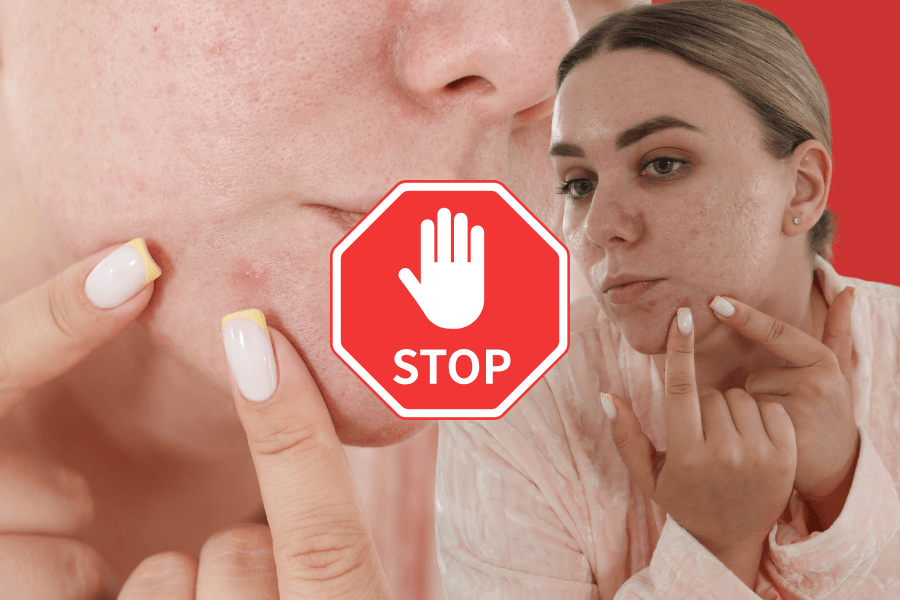
Let’s be real — popping pimples is one of those things almost everyone does, despite knowing they probably shouldn’t. It’s almost instinctive. You spot something on your chin before a big meeting, and suddenly your fingers have a mind of their own.
But here’s the thing. That ten-second decision can set your skin back by weeks. Sometimes longer.
This isn’t about shaming anyone for doing it — it’s about understanding what’s actually happening under the skin when you squeeze, and why there are far better options available now than there were even five years ago. Some of them are genuinely good. A few of them are almost satisfying in the same way that popping used to be.
So. Seven reasons to stop. And then — more importantly — what to do instead.
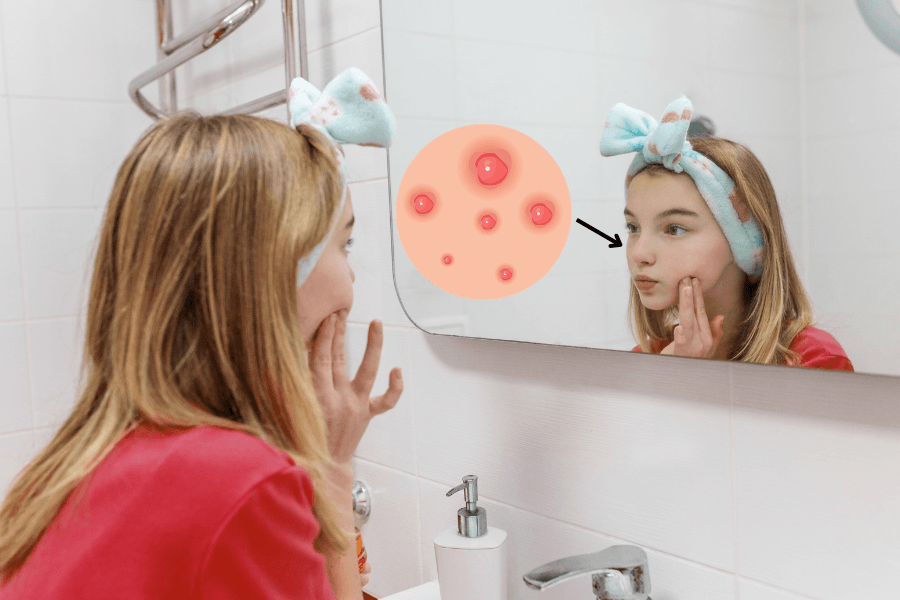
Popping pimples can push bacteria deeper into the skin, increase inflammation, and raise the risk of scarring or pigmentation. Dermatologists usually recommend alternatives such as hydrocolloid pimple patches, targeted acne treatments, and professional care for deeper lesions.
1. You’re probably pushing bacteria deeper, not out
This is the one that gets people. The assumption when you pop a pimple is that you’re getting the gunk out. And sometimes, sure, some of it comes out. But a significant amount of what’s in that pimple — the bacteria, the sebum, the dead skin cells — gets pushed sideways and downward into the surrounding tissue.
That’s not a theory. That’s what’s happening when a pimple you popped turns into a bigger, angrier pimple two days later in roughly the same spot. You haven’t solved the problem. You’ve redistributed it.
2. The scarring risk is real — and not always reversible
Post-inflammatory hyperpigmentation. Post-inflammatory erythema. Atrophic scarring. These are the things dermatologists see regularly in patients who’ve had long-term popping habits, and they range from dark marks that hang around for months to actual textural changes in the skin that can be genuinely difficult to address.
Darker skin tones are particularly vulnerable to hyperpigmentation from trauma — so the risk isn’t equal across all skin types, and it’s worth knowing where you sit on that spectrum before you decide a spot is worth squeezing.
Some of this fades. Some of it doesn’t, not without professional treatment. That’s the honest version of this conversation. The Better Health Channel, run by the Victorian Government, has a solid overview of acne-related skin damage and when to seek professional care.
3. Cystic acne popping dangers are in a category of their own
If you’ve ever tried to pop a deep, painful lump that never comes to a head — that’s likely a cystic lesion. And the cystic acne popping dangers associated with those are significantly worse than with surface-level whiteheads.
Cystic acne sits deep in the dermis. There’s nothing to extract at the surface. Squeezing it doesn’t release anything — it just compresses the inflamed tissue, increases the risk of rupture beneath the skin, and almost guarantees post-inflammatory scarring. It also hurts, which is usually the first sign that you’re doing something your skin genuinely doesn’t want you to do.
Cystic acne specifically needs professional attention — a dermatologist can offer options including corticosteroid injections that may reduce inflammation within 24–48 hours in some cases. That’s not something a squeeze at the bathroom mirror can replicate.
4. Your hands are not sterile. At all.
Think about everything your hands have touched today before you got home and stood in front of the mirror. Phones. Keyboards. Door handles. Money. Other people’s hands.
The skin around a pimple already has a compromised barrier. Introducing that bacterial load directly to an open follicle is — let’s call it suboptimal. Secondary infections from popping are more common than people realise, and they’re significantly harder to manage than the original spot.
Wash your hands compulsively if you’re going to touch your face. Better yet, don’t touch your face. But if you must — wash your hands.
5. Blackhead extraction done wrong causes more congestion
Blackheads are their own category of tempting. They’re right there, visible, seemingly begging to be extracted. And the DIY approach — fingers, nails, those little metal extractor tools from the chemist — often does get something out.
The problem is what it also does. Aggressive manual pressure on the pore stretches it. Over time, repeatedly stretched pores appear larger and become more prone to refilling. Blackhead extraction in Australia is a service offered by trained skin therapists and dermal clinicians for a reason — the technique, pressure, and preparation involved in professional extraction is genuinely different from what most people do at home, and the outcomes reflect that.
If blackhead congestion is a regular issue for you, a professional skin therapist or dermatologist is worth a visit. Many clinics offering professional pimple extraction also provide ongoing skincare plans, which address the underlying congestion rather than just the symptoms.
6. You’re creating an open wound — and then probably ignoring it
The moment a pimple is popped, you have an open wound on your face. A small one, sure. But still — broken skin, exposed to everything in your environment, and in a spot that’s probably going to get touched again before it heals.
Most people pop something and then go about their day. Maybe they put a bit of concealer on it, which — if the skin is broken — is introducing product directly into an open wound. Foundation brushes and beauty sponges are not clean in the way that would make that a good idea.
At minimum, if a spot has been squeezed, it needs to be treated as a wound. Gentle cleanser, something to support the skin, and ideally left alone.
7. There are genuinely better options now — and some of them actually work
This is the part worth staying for.
Pimple patches for whiteheads have become one of the most genuinely useful additions to acne skincare in recent years. Hydrocolloid patches — the good ones — create a moist, protected environment over a whitehead that draws out fluid and sebum overnight. Peel one off in the morning and the visual result is, frankly, more satisfying than popping ever was. With none of the surrounding damage.
They work best on surface-level whiteheads that have already come to a head. They’re not going to do much for a deep cystic lesion — that’s a different problem requiring a different solution. But for the classic whitehead that’s tempting you at 10pm? A pimple patch for whiteheads is a significantly better call.
What To Do Instead of Popping Pimples
Glad you asked.
For whiteheads: Reach for a hydrocolloid pimple patch. Apply to clean, dry skin. Leave overnight. The results are usually visible by morning, without the trauma to surrounding tissue.
For blackheads: Look into a salicylic acid cleanser or BHA exfoliant used consistently — these work within the pore over time and are far more effective long-term than manual extraction at home. For visible, stubborn congestion, blackhead extraction in Australia performed by a qualified skin therapist is worth the investment.
For knowing how to drain a pimple safely: The honest answer is that most people shouldn’t be attempting this at home. But if a spot has genuinely come to a head and you feel you have to do something — clean hands, clean environment, gentle pressure from the sides (never downward), and stop immediately if it doesn’t release easily. Forcing it is where the damage happens. Patch it immediately after with a hydrocolloid dressing and leave it alone.
For cystic or deep acne: This is a professional situation, full stop. A dermatologist can assess whether a cortisone injection, prescription topical, or oral medication is appropriate. Searching for professional pimple extraction near me is a reasonable starting point — look for clinics staffed by qualified dermal therapists or dermatologists, and ask about their approach to ongoing management rather than just one-off extraction.
For ongoing acne: A consistent skincare routine that addresses the underlying causes — excess sebum, congestion, bacterial load, barrier health — will always outperform reactive spot treatment. That might include a salicylic acid or benzoyl peroxide cleanser, a non-comedogenic moisturiser, and targeted treatments. And if over-the-counter options aren’t cutting it, an online acne consultation may be worth considering. Acne Express offers a straightforward way to access a practitioner-reviewed acne management plan without needing to wait for an in-person referral — a practical option for anyone in Australia who’s been going around in circles with their skin.
A rough guide to when to seek professional help
General reference only — not a substitute for personalised advice.
Situation |
Suggested approach |
Surface whitehead |
Hydrocolloid pimple patch overnight |
Blackhead congestion |
BHA exfoliant + professional extraction |
Inflamed papule |
Leave alone, spot treatment, no squeezing |
Cystic nodule |
Dermatologist — cortisone injection may help |
Persistent or widespread acne |
GP or dermatologist referral |
The bottom line
Popping pimples is one of those habits that feels productive in the moment and rarely is. The skin underneath is doing its job — containing an infection, walling it off, working to resolve it. When you interfere with that process, you’re not helping it along. You’re just adding variables.
The good news is that better alternatives exist — pimple patches for whiteheads, professional extraction for stubborn congestion, and genuine clinical options for anything more serious. For persistent acne that’s affecting your confidence or quality of life, please don’t rely on home remedies alone. A practitioner-reviewed plan can make a real difference — and if getting to a clinic feels like too much of a hurdle right now, Acne Express provides an accessible online pathway to practitioner-guided acne management, available to Australians from anywhere in the country. If hormonal factors may be contributing to your breakouts — which is more common than most people realise, particularly in women — Jean Hailes for Women’s Health offers clear, Australian-based guidance on the hormonal side of acne that often gets overlooked.
For a searchable directory of qualified dermatologists across Australia, the Australasian College of Dermatologists is the right place to start. General information on acne management is also available through Healthdirect Australia — a government-funded resource with no product affiliations.
FAQs
Dermatologists generally recommend avoiding popping pimples because squeezing can increase inflammation and scarring risk.
Squeezing can push bacteria, oil, and debris deeper into the skin, which may increase inflammation and delay healing.
Hydrocolloid patches can help absorb fluid from surface-level whiteheads and protect the skin while it heals.
Disclaimer: This article is for general information purposes only and does not constitute medical or therapeutic advice. It is not a substitute for professional consultation with a qualified health practitioner. No specific products or clinics are endorsed. Always read the label. If symptoms persist, see your healthcare professional. Therapeutic claims relating to skincare products in Australia are regulated by the Therapeutic Goods Administration (TGA).